

worldwide@absin.cn
- Cart 0
- English
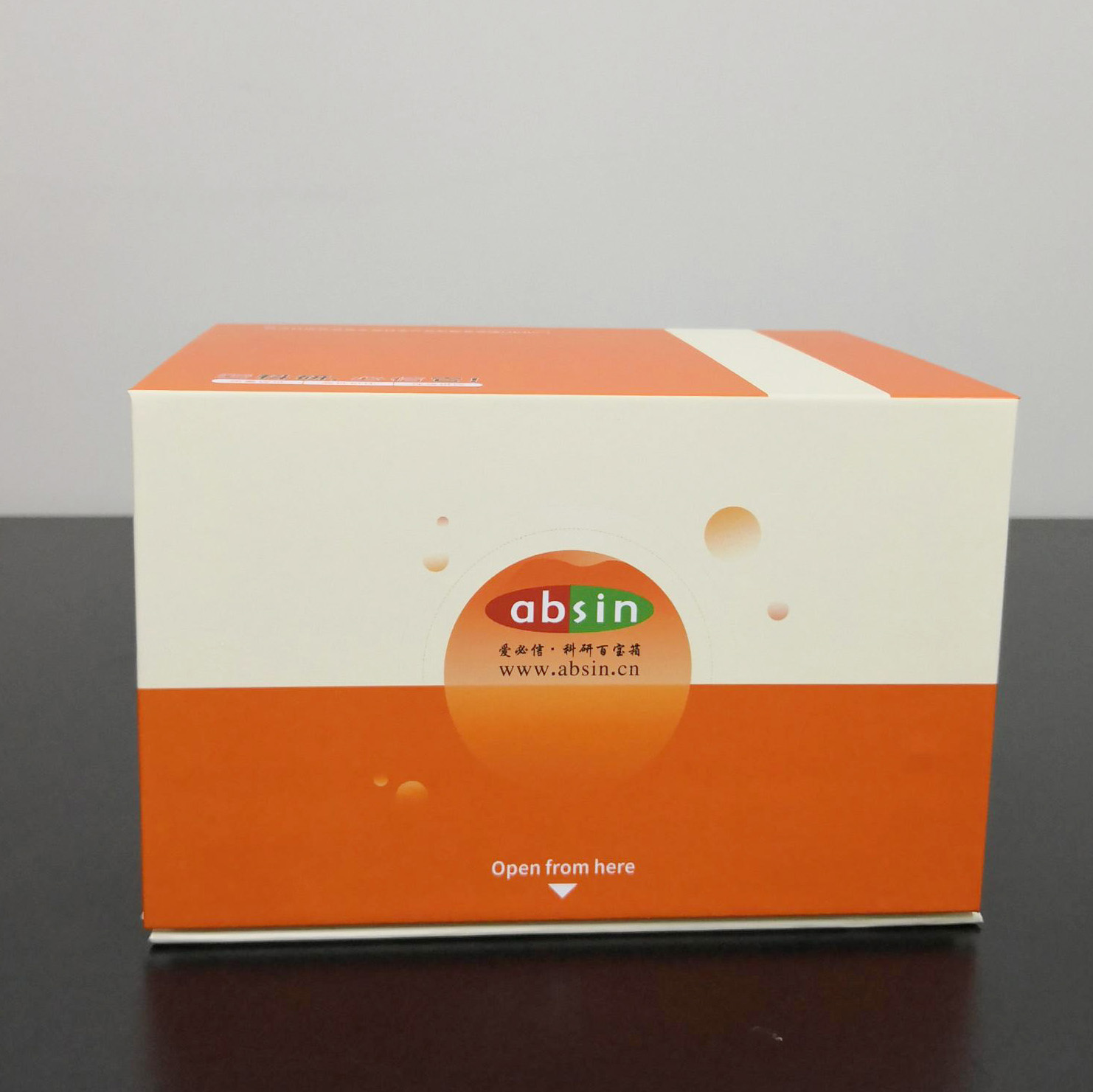
Mouse CXCL1/KC (IL-8) ELISA Kit
- Datasheet
- Collect
Share: 


 Request bulk quotation
- Product Details
- FAQ
- Pictures
- Documents
Detection Principle:
The double antibody sandwich ELISA method was used in this experiment. Anti mouse cxcl1/kc monoclonal antibody is coated on the microplate. Cxcl1/kc in samples and standards will bind to the antibody fixed on the plate, and the free components will be washed away; Horseradish peroxidase labeled anti mouse cxcl1/kc polyclonal antibody was added, and the unbound antibody was washed away; Add substrate solution (chromogenic agent), and the color of the solution is directly proportional to the bound target protein; Add termination solution; The absorbance was measured with a microplate reader.
Detection Type: double antibody sandwich method
Form: pre coated 96orifice plate
Detection Sample Type: cell supernatant, serum, Plasma
Loading Amount: 100ul
Kit Components:
Pre coated 96well plates, standards, anti mouse cxcl1/kca copy of antibody detection, dilution buffer, chromogenic solution (a, b), washing solution, termination solution, sa-hrp, plate sealing membrane and instructions.
Sensitivity: see the instructions
Detection Range: 15.6-1000 pg/ml
Recovery Range: 84-110%
Storage Method: 2-8℃
Standard Curve


Background:
CXCL1 (GRO alpha) is a member of the CXC chemokine family. CXCL1 contains an ELR motif and preferentially attracts neutrophils. Human CXCL1 is post translationally modified and divided into three isoforms, known as CXCL1 (4-73), CXCL1 (5-73), and CXCL1 (6-73). These isoforms are produced by proteolytic cleavage after secretion by peripheral blood mononuclear cells, and their in vitro activities are higher than those of the full-length protein. The other two CXC proteins cxcl2 (or gro beta) and cxcl3 (or gro& gamma;)It has 90% and 86% amino acid sequence homology with CXCL1, respectively. Human CXCL1 mRNA is expressed in foreskin fibroblasts, synovial fibroblasts, chondrocytes, and osteocytes. In addition, CXCL1 mRNA has been detected in breast fibroblasts and epithelial cells, endothelial cells, activated monocytes, macrophages, and neutrophils. CXCL1 is a growth regulatory gene that is constitutively overexpressed in tumorigenic cells. As a result, elevated levels of CXCL1 can be found in several types of tumors and cancers, including lung cancer and melanoma.
CXCL1 is a member of the CXC family of chemokines. Chemokines play a role in normal and pathological processes, including anaphylaxis, angiogenesis, inflammation, tumor growth, and metastasis. Mouse cxcl2 and cxcl3 share 67% and 60% sequence homology with mouse CXCL1, respectively. In addition, rat CXCL1 has 89% homology with mouse CXCL1.
Homologues of IL-8 have long been identified in other species, such as sheep (Yoshimura and Johnson, 1993), rabbits (Yoshimura and yuhki, 1991), pigs (Goodman et al., 1992) and dogs (Ishikawa et al., 1993), but so far, homologues of IL-8 protein in mice and rats have not been clearly defined. At present, MIP-2 (ccl8) and KC (CXCL1) are widely believed to be the functional homologs of IL-8 protein in mice
Tips : This product is for research use only. Not for use in diagnostic prodcedures.