

- Cart 0
- English
Focus on Hot Topics of National Natural Science Foundation of China | Exosomes + miRNAs: Unlocking the Codes of Biological Communication, a Comprehensive Guide to Research Tools
July 09, 2026
Clicks:577


In the cutting-edge track of life science research, there are always certain "golden combinations" dominating the National Natural Science Foundation of China (NSFC) project list, among which the pairing of exosomes and miRNAs stands out prominently. From basic research to clinical translation, these two "messengers of life" can be found everywhere. The release of the 2023 MISEV Guidelines has further pushed relevant research into a new era of standardization and precision. Today, we conduct an in-depth analysis of this hot research topic, and deliver a full-process research solution for your reference.
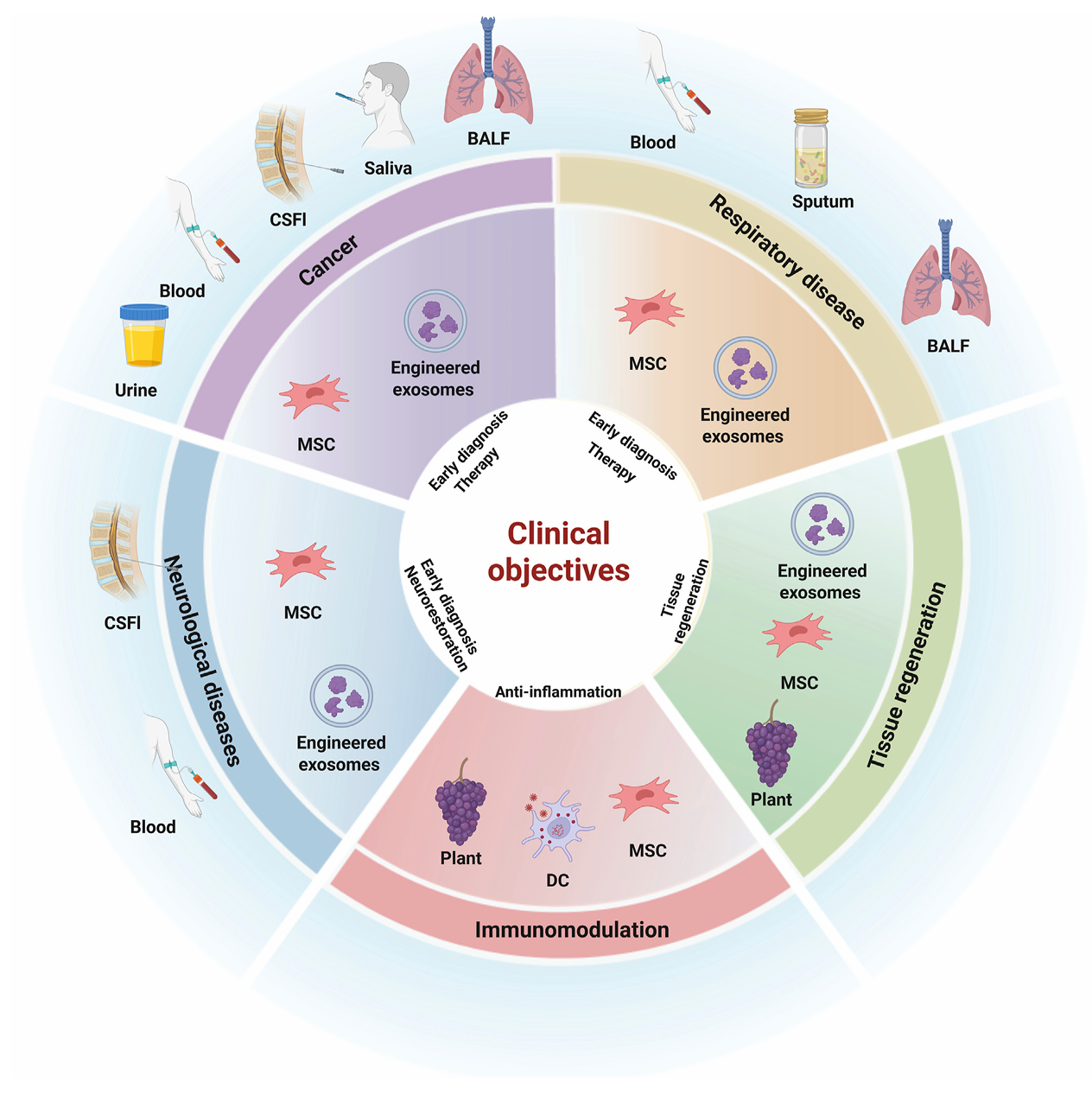 Figure 1 Applications of EVs in various diseases
I. Analysis of NSFC Research Hotspot: Why Are Exosome + miRNA Combinations Extremely Popular?
The Nobel Prize in Physiology or Medicine in 2013 and 2024 were awarded for breakthrough studies on extracellular vesicles (EVs) and miRNAs respectively. The two substances are closely linked and can be described as a "Nobel Prize-level matched set" — If exosomes are regarded as precise couriers shuttling inside organisms, miRNAs are the core cargo carrying life regulatory instructions within these deliveries.
 Figure 2 In 2013, the regulatory mechanism of intracellular vesicle trafficking won the Nobel Prize in Physiology or Medicine
In recent years, research directions centered on exosomes & miRNAs have been continuously expanded. Spanning basic mechanisms to clinical transformation, multiple fields have become key funding priorities of NSFC:
▶ Cross-kingdom Regulatory Mechanisms: Recent research led by Dr. Feng Cui’s team at the Institute of Zoology, Chinese Academy of Sciences revealed that rice-derived exosomes can deliver miRNAs into Laodelphax striatellus, targeting viral and insect genes to regulate viral transmission homeostasis. Studies on such interspecies cell-cell communication have emerged as a new frontier in fundamental research.
▶ Biomarkers for Disease Diagnosis and Prognosis: Exosome-encapsulated miRNAs exhibit tissue specificity and remain stable in biofluids including blood, saliva and urine. They hold great potential for early diagnosis and prognostic evaluation of cancers, cardiovascular disorders, neurodegenerative diseases and more. For instance, aberrantly expressed miR-21, let-7 and other miRNAs are stably circulated within the bloodstream via exosomes, making them ideal targets for non-invasive diagnosis.
▶ Targeted Therapeutic Vectors: As natural delivery carriers for miRNAs, exosomes protect miRNAs from nuclease degradation. Meanwhile, surface integrins, tetraspanins and other surface proteins enable accurate targeted delivery, resolving the stability and targeting bottlenecks restricting miRNA drug development. They represent the leading edge of current gene therapy research.
II. Research Standardization: Core Interpretation of the MISEV2023 Guidelines
With the rapid expansion of exosome research, experimental standardization and reproducibility have become critical concerns. In 2023, the International Society for Extracellular Vesicles (ISEV) released the updated MISEV2023 Guidelines, delivering comprehensive operational specifications for EV research.
 Figure 3 MISEV2023 Guidelines
Its core key points are summarized as follows:
1. Clarified Nomenclature Standards: Distinguish extracellular vesicles (EVs) from non-vesicular extracellular particles to eliminate conceptual confusion and unify research terminology.Extracellular vesicle (EV) refers generically to nanoscale lipid bilayer vesicles secreted by viable cells into the extracellular space, which are incapable of self-replication and lack functional cell nuclei. MISEV2023 recommends adopting the universal term "EV" to denote all vesicle subpopulations, or categorize EV subtypes based on physical and chemical properties such as size and density.
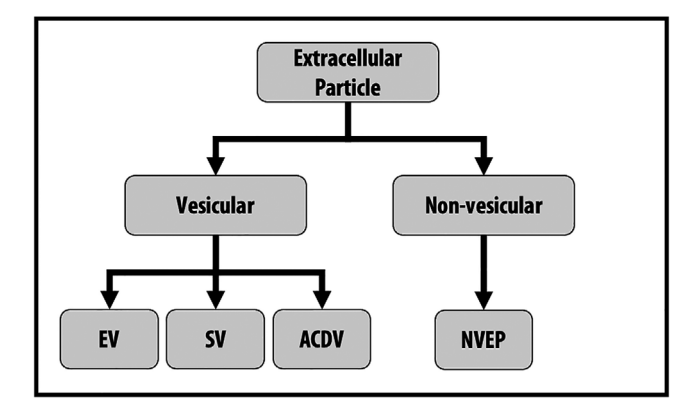 EP: Extracellular Particles; EV: Extracellular Vesicles; SV: Synthetic Vesicles; ACDV: Artificial Cell-Derived Vesicles; NVEP: Non-Vesicular Extracellular Particles
2. Optimized Sample Processing: Detailed standardized protocols for collection and preprocessing of diverse sample sources (cell culture supernatants, biofluids, solid tissues, etc.), emphasizing the impact of pre-analytical variables on experimental readouts.
3. Rigorous Isolation and Characterization Requirements:Combined multiple isolation and concentration methods are recommended for exosome preparation. Meanwhile, multi-dimensional characterization is mandatory rather than single marker detection: identification must cover morphology (TEM), particle size distribution (NTA), and canonical surface protein markers (CD9, CD63, CD81, etc.) to guarantee authentic research objects.
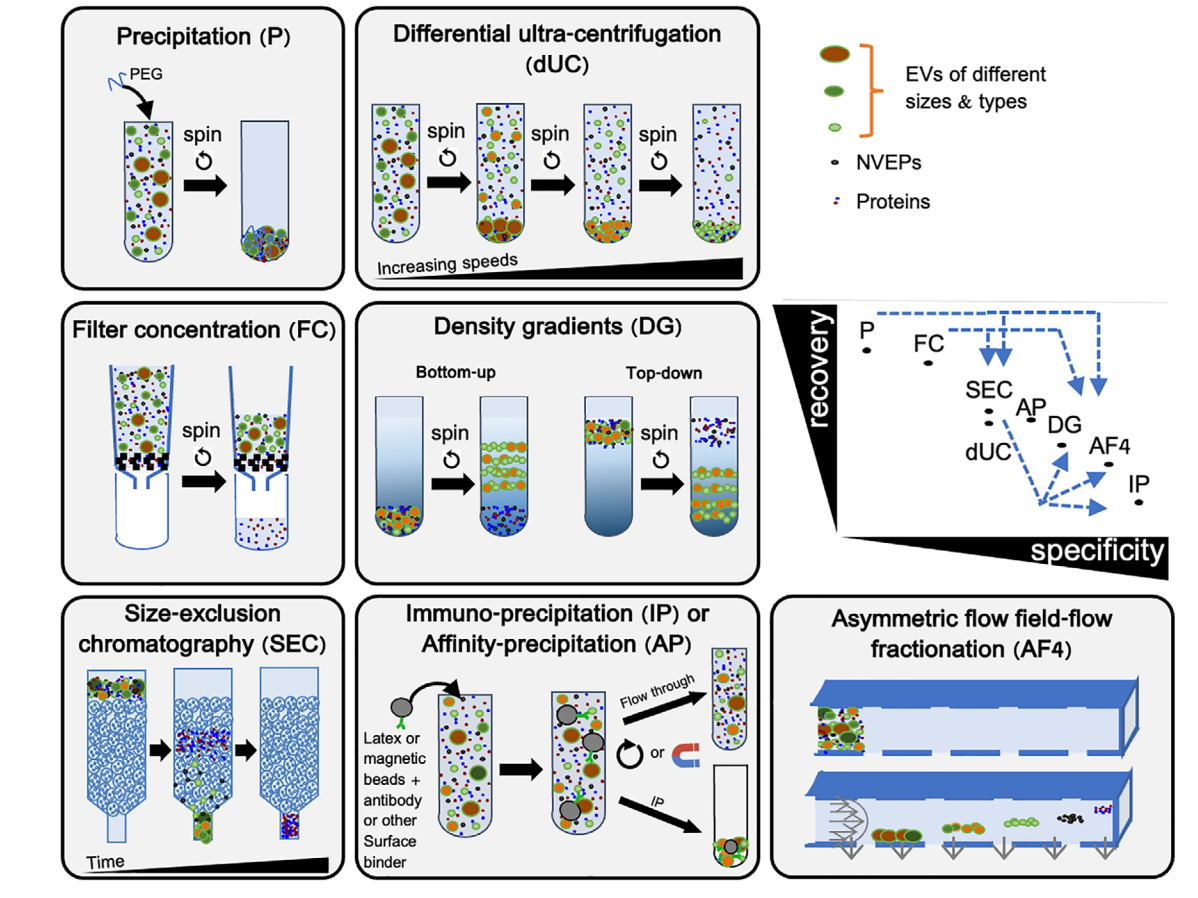
Ultracentrifugation (UC): Classic universal method yet prone to co-precipitation of impurities; Density Gradient: High purity with low yield;
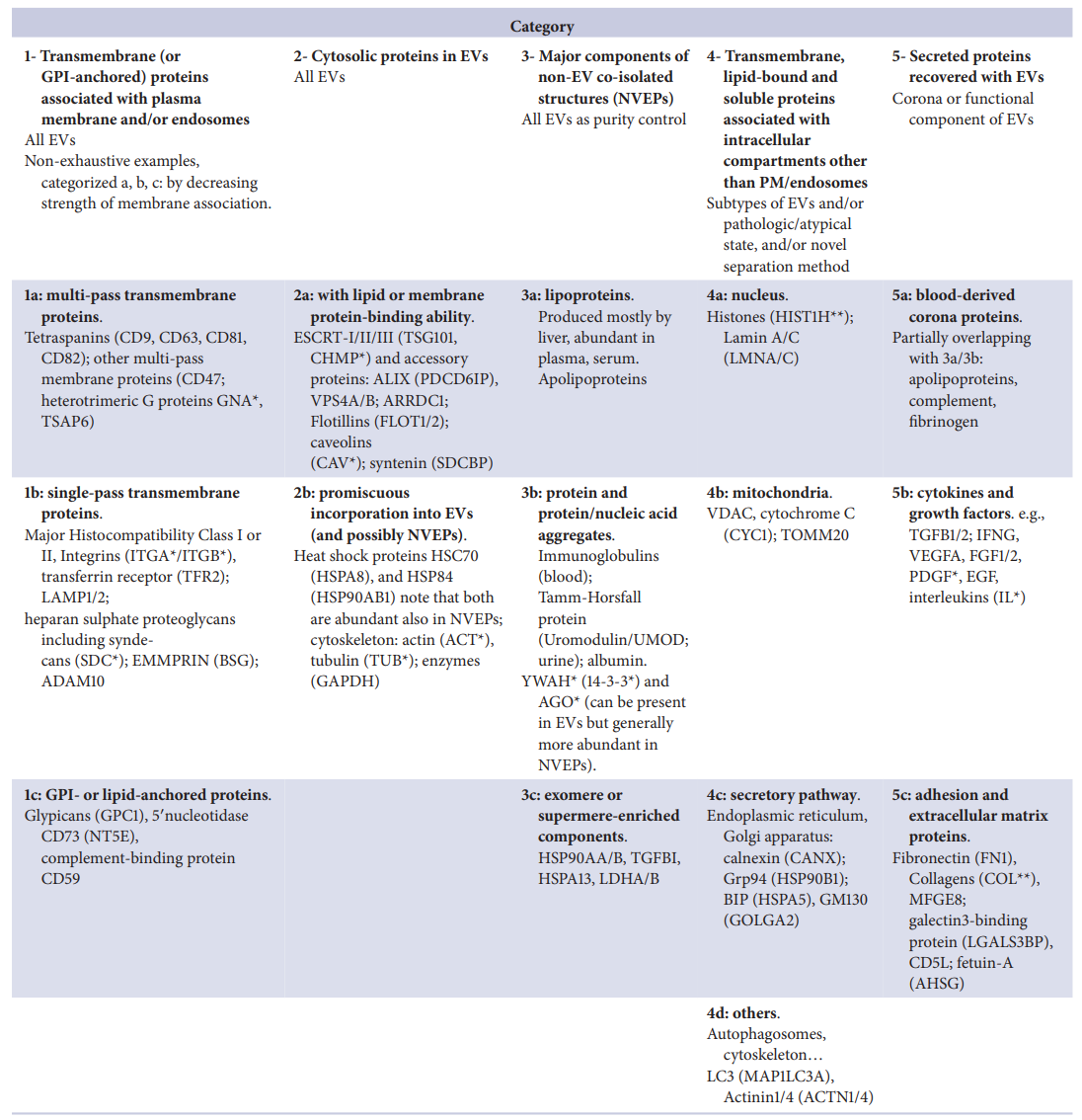 At least one protein marker from Category 1, 2 and 3 shall be analyzed to assess the presence of NVEPs in EV preparations
4. Newly Added Chapter for Functional Research:Supplementary content covering EV biogenesis, uptake mechanisms and in vivo experimental methodologies, providing standardized guidance for functional validation assays.
The core objective of MISEV2023 is not to erect research barriers, but to enhance experimental rigor and reproducibility through standardized workflows, facilitating the translational progression of exosome research from basic laboratory work to clinical applications.
III. Absin Full-Process Research Portfolio: One-Stop Support from Cell Culture to Quantitative Analysis
Exosome + miRNA research workflows are highly complex, covering cell culture, exosome purification, nucleic acid extraction, modification & characterization, quantitative profiling and other critical steps. Experimental quality at every stage directly determines research outcomes. To address these core experimental demands, Absin has launched a full-series product portfolio (https://www.absin.net/Exosomes%20research.html) to underpin your research projects:
1. Cell Culture:Exosome-depleted Fetal Bovine Serum (abs993), Exosome-Specific Serum-Free Medium (abs9430), Exosome-Specific Serum-Free Medium (Supplemented with Growth Factors) (abs9774) are supplied to effectively reduce background contamination and guarantee high-quality exosome secretion.
2. Exosome Purification:Diversified purification products including Size Exclusion Chromatography (SEC) Columns (Exosome Purification Kit (SEC), abs9777), Precipitation & Filtration kits (Cell Supernatant Exosome Extraction Kit, abs50040) are available for selection according to sample volume and experimental schemes, enabling efficient, mild separation while preserving native biological activity of exosomes.
3. Exosome Identification & Quantification:Multi-dimensional detection covering morphology, particle size and canonical surface protein markers (Rabbit anti-CD9 Polyclonal Antibody, abs145771etc.) achieves precise characterization of exosomal morphology, particle size and marker expression. Additionally, Absin provides sandwich ELISA kits for quantitative detection of exosomes (abs50054).
4. Nucleic Acid Extraction:Specialized extraction kits (Exosome RNA Extraction Kit, abs60263, etc.) are developed for exosomal miRNA/RNA/DNA isolation, efficiently enriching target nucleic acids and eliminating impurity interference to meet downstream detection requirements. A full panel of miRNA quantitative detection kits is also provided.
5. Exosome Functional Research:In vitro labeling or in vivo live imaging of isolated exosomes facilitates further functional exploration. Fluorescent labeling remains the most widely adopted method by researchers due to simple operation. Absin supplies a complete set of exosome labeling fluorophores including DiR(abs45153692), DiI(abs42002237), DiO(abs45153674), DiD(abs47048165), etc.
6. Engineered Exosome Modification: Specific modification and remodeling of exosomes to confer cell and tissue targeting specificity. Exosome Surface Modification Kit (SA Enzyme), Cat. No.: abs50066. Under catalysis of SA enzyme, peptides or target proteins can be covalently conjugated onto exosome surface.
Absin Full-Process Exosome Research Products (Validated in Hundreds of Publications)
|
Category |
Cat. No. |
Product Name |
Specifications |
|
Cell Culture |
Exosome-Depleted Fetal Bovine Serum |
50mL |
|
|
Exosome-Specific Serum-Free Medium |
500mL |
||
|
Exosome-Specific Serum-Free Medium (With Growth Factors) |
500mL |
||
|
Ready-to-Use EV Standards |
HEK293 Extracellular Vesicle Standard |
1mL |
|
|
MSC Extracellular Vesicle Standard |
1mL |
||
|
Human Embryonic Kidney 293T Cell-Derived EVs |
1mL |
||
|
Umbilical Cord Mesenchymal Stem Cell Exosomes |
1mL |
||
|
Bone Marrow Mesenchymal Stem Cell Exosomes |
1mL |
||
|
Human Cervical Cancer HeLa Cell-Derived EVs |
1mL |
||
|
Exosome Purification Kits |
Plasma & Serum Exosome Extraction Kit |
20T |
|
|
Cell Supernatant Exosome Extraction Kit |
20T |
||
|
General Exosome Extraction Kit |
1mL |
||
|
Exosome Purification Kit (SEC) |
1mL |
||
|
Exosome Sample Pretreatment |
2× Exosome Storage Solution |
50mL |
|
|
Exosome-Specific Lysis Buffer |
20mL |
||
|
Exosome Characterization & Quantification |
Rabbit anti-CD9 Polyclonal Antibody |
100μL |
|
|
Rabbit anti-CD63 Monoclonal Antibody (4G3) |
100μL |
||
|
Rabbit anti-CD81 Monoclonal Antibody (3D6) |
100μL |
||
|
Exosome Quantitative Detection ELISA Kit |
96T |
||
|
Exosome Modification & Fluorescent Labeling |
Exosome Surface Modification Kit (SA Enzyme) |
20μg |
|
|
DiI Perchlorate |
100mg |
||
|
DiO Perchlorate |
25mg/100mg |
||
|
DiR Iodide |
5mg/25mg/100mg |
||
|
DiD Chlorobenzenesulfonate |
10mg/50mg |
||
|
Exosomal Nucleic Acid Extraction |
Exosome DNA Extraction Kit |
50T/100T |
|
|
Exosome RNA Extraction Kit |
50T/100T |
||
|
Exosome miRNA Extraction Kit |
50T/100T |
||
|
miRNA Quantification Assays
|
miRNA Poly(A) Tailing Reverse Transcription Kit |
20T/40T |
|
|
Plasma miRNA Poly(A) Tailing Reverse Transcription Kit |
25T/50T |
||
|
miRNA Poly(A) Tailing Dye-Based qPCR Kit |
200T/300T/400T |
||
|
miRNA Stem-Loop Reverse Transcription Kit |
25T/50T |
||
|
miRNA Stem-Loop Dye-Based qPCR Kit |
200T/400T |
||
|
miRNA Probe-Based Reverse Transcription Kit |
20T/40T |
||
|
Plasma miRNA Probe-Based Reverse Transcription Kit |
20T/40T |
||
|
miRNA Probe-Based qPCR Reagents |
100T/200T/400T |
Literature Validation
abs993: J Control Release. 2024 Aug;372:531-550. doi: 10.1016/j.jconrel. IF: 10.5
abs45153692: Mol Cancer. 2024 Dec 6;23(1):270. doi: 10.1186/s12943-024-02184-8. IF: 33.9
abs60263: J Agric Food Chem. 2023 Oct 11;71(40):14742-14757. doi:10.1021/acs.jafc.3c03350. IF: 6.1
abs47048165: J Control Release.2025 Jun 10;382:113737. doi:10.1016/j.jconrel.2025.113737. IF: 10.5
abs50054: Materials & Design. May 2024. DOI: 10.1016/j.matdes.2024.112969. IF:7.6
References:
1. Clinical applications of extracellular vesicles: recent advances and emerging trends. Front Bioeng Biotechnol. https://doi.org/10.3389/fbioe.2025.1671963.2. J Extracell Vesicles. 2024 Feb;13(2):e12404. doi: 10.1002/jev2.12404.
Contact Absin
Absin provides antibodies, proteins, ELISA kits, cell culture, detection kits, and other research reagents. If you have any product needs, please contact us.
| Absin Bioscience Inc. worldwide@absin.cn |
 Follow us on Facebook: Absin Bio Follow us on Facebook: Absin Bio |