

- Cart 0
- English
OCT Embedding Medium: The Critical Support for Frozen Sectioning
July 06, 2026
Clicks:1685


On the lab bench, how can delicate tissue be frozen and cut into ultra-thin sections? The answer lies in a water-soluble mixture known as OCT embedding compound.
In immunohistochemistry laboratories, researchers place tissue samples flat into embedding molds, fill the molds with sufficient OCT compound to fully submerge tissues, then slowly lower the molds into a vessel filled with liquid nitrogen.
When the bottom of the mold contacts liquid nitrogen and begins to boil and vaporize, leave it in place for 10–20 seconds for rapid tissue freezing, after which frozen sectioning can be performed. This process relies on the supporting property of OCT compound, converting soft tissue into rigid blocks suitable for slicing.
Definition: What is OCT Embedding Compound?
OCT compound is the abbreviation for Optimal Cutting Temperature compound, a water-soluble blend of polyethylene glycol and polyvinyl alcohol, also referred to as frozen section OCT embedding medium.
Widely adopted in immunohistochemistry labs, its primary function is to provide mechanical support during frozen sectioning, improve tissue integrity, and minimize tissue wrinkling and fragmentation.
OCT compound is water-soluble and fully dissolves in water during floatation, thus avoiding non-specific background staining in subsequent staining procedures. Pre-infiltrating tissues with OCT mixture before cryostat sectioning greatly enhances section quality. Physically, OCT compound possesses moderate viscosity to firmly adhere tissues to specimen chucks. While still liquid before full freezing, specimens can be slightly repositioned to adjust the tissue orientation for ideal cutting planes.
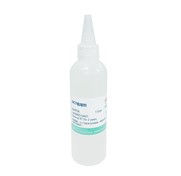
Core Functions & Mechanism of OCT Compound
The core function of OCT compound is mechanical tissue support during frozen sectioning. It improves tissue continuity to effectively reduce wrinkling and fragmentation and optimize section quality.
During sectioning, OCT compound softens tissues for smooth slicing while preserving native tissue morphology and architecture, which is critical for subsequent observation and analysis. Thanks to its water solubility, OCT medium dissolves completely in floatation buffer without leaving residues on specimens or slides, eliminating extra background staining and guaranteeing reliable experimental results.
OCT compound enables rapid cryopreservation of tissue samples with minimal ice crystal-induced damage, retaining native tissue morphology and cellular microstructure for direct morphological observation.
Practical Applications: Standard Operating Protocols for OCT Compound
1) Standard Embedding Workflow
According to the Laboratory Animal Care & Management Guidelines from Shanghai Jiao Tong University School of Medicine, the standard OCT embedding procedure consists of three key steps:
1. Retrieve tissue blocks equilibrated in sucrose solution, immerse in a 1:1 volume mixture of 20 g/L sucrose solution and OCT compound at room temperature for 2 hours.2. Transfer tissues into pure OCT compound and incubate for 4 hours at room temperature, replace with fresh OCT compound and incubate for another 6 hours.
3. Mount specimens on specimen chucks, section with a cryostat at -22°C to obtain 10 μm-thick sections, mount onto pre-treated glass slides, and store slides at -20°C.
2) Rapid Embedding Method (Absin Protocol)
Absin provides a more time-efficient rapid embedding workflow as follows:
1. Place tissue blocks flat inside embedding molds and add sufficient OCT compound to fully cover tissues.2. Slowly place the mold into a liquid nitrogen container; once the mold bottom contacts liquid nitrogen and vaporizes, keep the mold suspended above liquid nitrogen (do not fully submerge).
3. Complete rapid freezing within 10–20 seconds, then perform sectioning with a cryostat.
3) Critical Operation Notes
· Dispense OCT compound evenly and avoid air bubbles during embedding.· Plan cutting planes and tissue orientation before embedding; label residual OCT tissue blocks and store in cryovials at -80°C for later use.
· Fresh tissues should be embedded in OCT for frozen sectioning within 30 minutes after dissection.
· For tissues that cannot be processed immediately, snap-freeze in liquid nitrogen and store at -80°C, or fix and dehydrate in sucrose solution prior to OCT embedding.
Wide Application Scenarios of OCT Embedding Compound
Originally developed exclusively for frozen section preparation, OCT compound has now been applied across numerous experimental fields.
1. Immunohistochemistry & Serous Effusion Cytological Examination
OCT compound is an indispensable reagent for IHC assays as it preserves tissue antigenicity without interfering with antibody binding. Cytological examination of exfoliated cells from serous effusions (pleural effusion, ascites, pericardial effusion, etc.) serves as a core pathological diagnostic tool for malignant tumors. In recent years, the water-soluble property of OCT compound has been utilized to form a supporting scaffold for pelleted cells after centrifugation of serous effusions. Subsequent dehydration, clearing and paraffin infiltration generate cell blocks. This simple protocol concentrates target cells, elevates the positive detection rate of malignant tumor cells, and facilitates differential diagnosis of tumor subtypes.
2. Processing of Cyst Wall Tissues
Frozen sectioning with OCT compound effectively resolves sectioning difficulties encountered with cyst wall tissues. Research confirms that OCT embedding enables fast sectioning of cyst wall specimens with intact tissue architecture, clear staining and accurate pathological diagnosis.
3. Diagnostic Analysis of Skin Biopsy Specimens
For skin biopsy diagnosis, OCT compound plays a vital role in direct immunofluorescence frozen sectioning, which employs fluorescent antibody staining for antigen localization and identification.
Novel applications of OCT compound are continuously being explored. Beyond conventional tissue sectioning, researchers leverage its water solubility as a cell scaffold for cell block preparation from serous effusions, followed by dehydration, clearing and paraffin embedding to enrich target cells and improve detection sensitivity for malignant cells. Every precise pathological diagnosis relies on this underrated fundamental laboratory reagent.
Absin OCT Embedding Compound Recommendation
| Catalog No. | Product Name | Specifications |
|---|---|---|
| abs9756 | OCT Embedding Compound | 110mL |
Contact Absin
Absin provides antibodies, proteins, ELISA kits, cell culture, detection kits, and other research reagents. If you have any product needs, please contact us.
| Absin Bioscience Inc. worldwide@absin.cn |
 Follow us on Facebook: Absin Bio Follow us on Facebook: Absin Bio |