

- Cart 0
- English
Technical Guide for Mouse Heart Tissue Dissociation Kit
May 15, 2026
Clicks:70


Tissue dissociation is a critical technical step to convert solid tissues into single‑cell suspensions, which directly affects the quality of subsequent experimental data. The Mouse Heart Tissue Dissociation Kit, specially designed for cardiac tissue processing, provides a standardized solution for cardiovascular research.
What is the Mouse Heart Tissue Dissociation Kit?
The Mouse Heart Tissue Dissociation Kit is a multi‑enzyme composite preparation. Through synergistic effects of biological enzymes, it mildly and efficiently disrupts the extracellular matrix of cardiac tissue to release functional cells. Optimized specifically for the properties of mouse heart tissue, the kit enables effective cell isolation while maintaining cell membrane integrity and surface antigen epitopes.
The kit usually contains multiple enzymatic components such as collagenase and neutral protease, which specifically degrade connective tissue components including collagen and elastin without over‑digestion. The resulting cell suspension features high viability and well‑preserved surface markers, and can be directly used for downstream analysis.
What are the Core Advantages of the Dissociation Kit?
Compared with traditional trypsin digestion or mechanical grinding methods, the specialized dissociation kit shows technical advantages in multiple aspects:
Mild and Efficient Enzymatic System: Synergistic multi‑enzyme action avoids over‑digestion by single enzymes. Cell viability can exceed 85%, significantly reducing interference from dead cell debris in downstream experiments.
Antigen Integrity Preservation: Optimized enzyme formulation and reaction conditions maximally retain key immune cell surface markers such as CD45, CD3, CD4 and CD8, ensuring accuracy in flow sorting and immunophenotypic analysis.
Standardized Operating Procedures: A complete technical workflow from tissue processing to cell purification is provided, reducing inter‑experimental variation and improving data reproducibility.
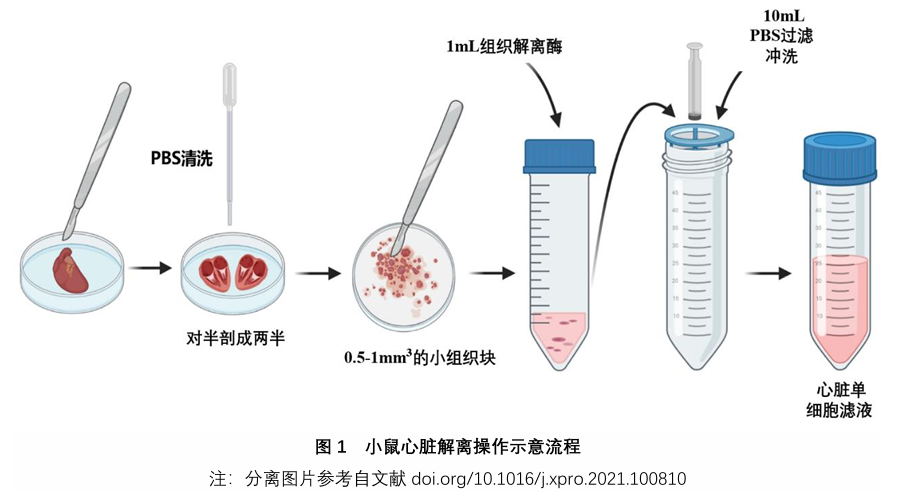
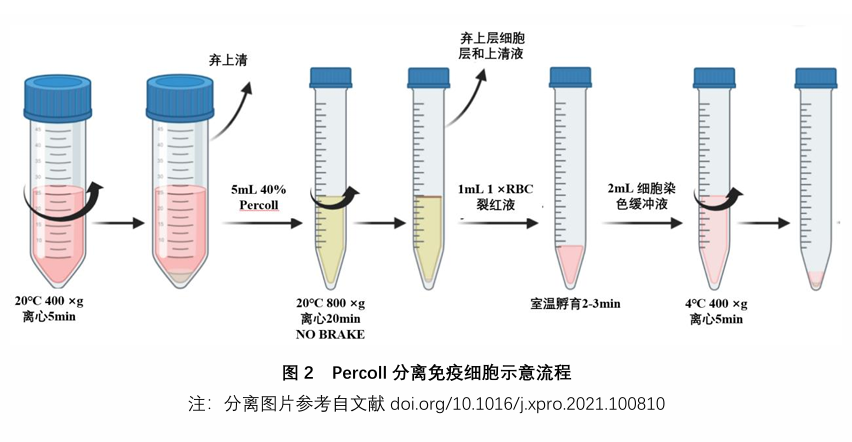
Experimental Flow Chart
Which Experiments Can Apply the Mouse Heart Tissue Dissociation Kit?
Flow Cytometry Analysis: Obtained cardiac single‑cell suspensions can be directly used for immune cell subset analysis, cardiomyocyte cycle detection, and cell apoptosis evaluation. After removing cardiomyocyte debris and red blood cell interference via Percoll density‑gradient centrifugation, rare cell populations such as cardiac resident macrophages and T lymphocytes can be precisely quantified.
Single‑Cell Sequencing Research: High‑quality single‑cell suspensions are a prerequisite for single‑cell RNA sequencing. Cells generated by the dissociation kit meet library construction requirements, and intact surface antigens support multi‑omics analysis including CITE‑seq, providing ideal starting materials for constructing cardiac cell atlases.
Primary Cell Culture: Isolated cardiomyocytes, cardiac fibroblasts or endothelial cells can be subjected to short‑term primary culture for studies on cell function, drug response or gene editing. Compared with cell lines, primary cells better reflect the in‑vivo biological status.
Drug Screening and Toxicity Evaluation: Primary cells derived from cardiac tissue can be used for in‑vitro cardiotoxicity evaluation of drugs (except hERG channel detection), or assessment of effects of cardiovascular protective agents on specific cell types, serving as an important supplement for organ‑level pharmacodynamic studies.
Immune Cell Function Research: Cardiac resident immune cells can be isolated with this kit to investigate inflammatory responses after myocardial infarction and immune regulatory mechanisms during myocardial fibrosis, providing technical support for understanding the immune microenvironment of cardiovascular diseases.
How to Obtain High‑Quality Cardiac Single‑Cell Suspensions?
Key Control Points for Tissue Pre‑treatment: Excised cardiac tissue should be rapidly placed in pre‑cooled culture medium, and all operations should be performed on ice. Tissue fragments should be cut into 0.5‑1 mm³ pieces; oversized pieces lead to insufficient digestion, while undersized ones increase mechanical damage risk.
Optimization Strategy for Digestion Parameters: Recommended digestion conditions are shaking at 80 rpm on a horizontal shaker at 37 °C for 30‑40 minutes. Too low shaking speed hinders enzyme penetration, while excessive speed increases cell shear force. Digestion endpoint is judged by tissue fragment status; partial cardiac tissue may require prolonged digestion up to 50 minutes.
Technical Pathway for Cell Purification: After digestion, undigested tissue fragments are removed by filtration through a 70 μm cell strainer, and cells are collected by centrifugation at 400 g for 5 minutes. Density‑gradient centrifugation with 40% isotonic Percoll solution (800 g, 20 min, acceleration 1, deceleration 1) effectively separates immune cells from cardiomyocyte debris and greatly improves target cell purity.
Red Blood Cell Removal Protocol: For immune cell isolation, treatment with red blood cell lysis buffer for 2‑3 minutes is recommended, followed by reaction termination with serum‑containing buffer. Excessive lysis reduces leukocyte viability, so reaction time must be strictly controlled.
What Technical Considerations Are Required in Application?
Tissue Freshness Requirement: Freshly harvested cardiac tissue is recommended; cell viability decreases significantly for tissue harvested more than 6 hours post‑mortem. Tissue preservation solution can be used for temporary storage if immediate processing is unavailable, but storage time should not exceed 24 hours.
Aseptic Operation Standards: For samples used in cell culture, all reagents and consumables must be sterile, and operations should be conducted in a biosafety cabinet. Enzymatic solutions should be aliquoted and stored at −20 °C to avoid enzyme activity decline caused by repeated freeze‑thaw cycles.
Quality Control Indicators: Post‑dissociation tests for cell viability (trypan blue exclusion or fluorescent dye method), cell yield (hemocytometer counting) and purity (target cell proportion verified by flow cytometry) are routine. Qualified suspensions should have viability > 80% and debris proportion < 20%.
Downstream Application Compatibility: For single‑cell sequencing, cell suspension concentration is suggested to be adjusted to 5‑10 × 10⁵ cells/mL to avoid cell aggregation at high concentration or low capture efficiency at low concentration. For flow analysis, cell concentration should be controlled at 1‑2 × 10⁶ cells/mL.
The Mouse Heart Tissue Dissociation Kit provides a reliable technical tool for basic cardiovascular research. Mastering its working principle and strictly following operating specifications can significantly improve the quality of single‑cell‑level research, providing high‑quality primary cell materials for revealing cardiac development and disease pathogenesis.
Absin Mouse Heart Tissue Dissociation Kit Recommendation:
| Cat. No. | Product Name | Size |
|---|---|---|
| abs50094 | Mouse Heart Tissue Dissociation Kit | 10T/25T |
Contact Absin
Absin provides antibodies, proteins, ELISA kits, cell culture, detection kits, and other research reagents. If you have any product needs, please contact us.
| Absin Bioscience Inc. worldwide@absin.cn |
 Follow us on Facebook: Absin Bio Follow us on Facebook: Absin Bio |