

- Cart 0
- English
Molecular Mechanism of Oligomycin Targeting Mitochondrial ATP Synthase and Its Research Applications in Tumor Metabolism
May 11, 2026
Clicks:73


Mitochondrial oxidative phosphorylation serves as the core hub of energy supply in eukaryotic cells. As a classic inhibitor of this process, Oligomycin plays an irreplaceable role in cellular energy metabolism research, tumor biology, and drug screening. This macrolide natural product derived from Streptomyces provides a precise tool for deciphering cellular bioenergetic mechanisms via highly specific inhibition of ATP synthase.
What Is Oligomycin?
Oligomycin is a macrolide antibiotic complex naturally produced as a metabolite of Streptomyces. Commercial oligomycin preparations are generally mixtures of three isomers (A, B, and C), among which Oligomycin A is the primary bioactive component and the most extensively studied compound (alias MCH 32).
Physicochemically, oligomycin appears as crystalline solid or white to off‑white powder with typical hydrophobic properties: soluble in dimethyl sulfoxide (DMSO, up to 300 mg/mL), ethanol, methanol, and acetone (50 mg/mL), yet insoluble in water. Such solubility determines solvent selection for cellular experiments — stock solutions are usually prepared in DMSO (common concentration: 15 mg/mL, approx. 18.96 mM) and further diluted with culture medium to working concentrations.
How Does Oligomycin Precisely Inhibit ATP Synthesis?
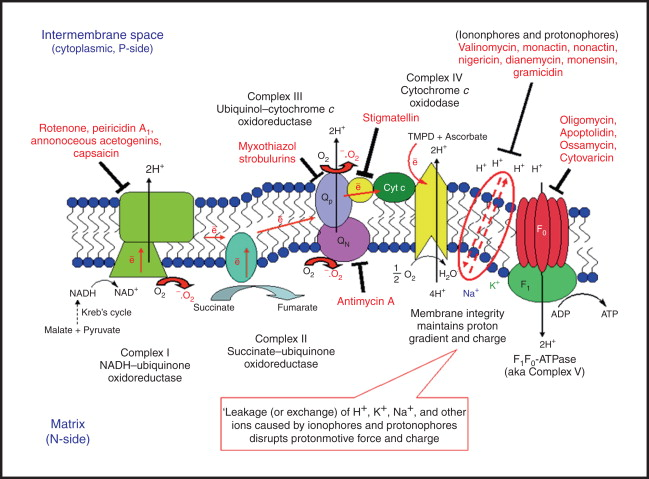
Oligomycin targets one site with extreme precision: mitochondrial F0F1‑ATP synthase (F0F1‑ATPase, also known as Complex V). As the terminal effector of oxidative phosphorylation, this enzyme converts the chemical potential energy stored in the proton gradient (proton‑motive force) into ATP.
F0F1‑ATP synthase consists of a membrane‑embedded F0 domain and a matrix‑facing F1 domain. Oligomycin binds to the proton channel of the F0 region (interface between c‑subunit ring and a‑subunit), physically blocking proton backflow through F0. This blockade triggers dual effects:
First, direct inhibition of ATP synthesis. With protons unable to reflux into the mitochondrial matrix via F0, catalytic activity of the F1 domain is shut down, preventing ADP and inorganic phosphate (Pi) from forming ATP.
Second, retrograde suppression of upstream electron transport chain activity. Proton pumping and backflow form a coupled system. Blockage of the F0 channel causes continuous proton accumulation in the intermembrane space, leading to hyperpolarization of the mitochondrial inner membrane potential (ΔΨm). This further inhibits proton‑pumping functions of Complexes I, III, and IV, ultimately blocking the entire oxidative phosphorylation process.
Studies show the inhibition constant (Ki) of Oligomycin A for ATP synthase is approx. 1 μM, while the Ki for detergent‑solubilized ATPase (Triton X‑100‑solubilized) drops to 0.1 μM, indicating high‑affinity binding to the purified enzyme.
Why Is Oligomycin Highly Focused On in Cancer Research?
Tumor cells are characterized by metabolic reprogramming, among which the Warburg effect (preferential glycolysis even under oxygen‑replete conditions) is a classic hallmark. Nevertheless, growing evidence indicates many tumors retain substantial oxidative phosphorylation capacity, and mitochondrial function is critical for cancer stem cell maintenance and drug resistance.
The value of oligomycin in cancer research lies in multiple aspects:
Metabolic heterogeneity detection: Oligomycin does not activate hypoxia‑inducible factor (HIF), meaning it can block oxidative phosphorylation without triggering hypoxic stress pathways. By comparing cell viability with/without oligomycin treatment, researchers can quantitatively assess tumor cell dependence on oxidative phosphorylation and identify "mitochondria‑addicted" tumor subtypes.
Cell‑cycle regulation: Studies demonstrate oligomycin treatment reduces Cyclin D1 expression, suggesting it may modulate cell‑cycle progression via energy stress signaling and providing novel insights for anti‑tumor strategies.
Bioenergetic adaptation research: In heterogeneous bioenergetic tissues, oligomycin enhances cellular bioenergetic adaptive responses. By establishing an "oxidative phosphorylation‑blocked" model, researchers can observe how cells switch to glycolysis compensation, alternative fatty‑acid oxidation pathways, or trigger adaptive autophagy.
Notably, oligomycin exhibits significant cytotoxicity against NCI‑60 tumor cell lines, with a growth‑inhibitory GI50 value as low as 10 nM, indicating high dependence of certain tumor cells on mitochondrial function.
Experimental Applications of Oligomycin
Oligomycin is widely applied across cutting‑edge biomedical research fields:
Tumor metabolism and immune microenvironment: In tumor immunology, oligomycin is used to evaluate metabolic requirements of immune cells such as T cells and macrophages. Effector T cells rely heavily on oxidative phosphorylation after activation, whereas regulatory T cells (Tregs) prefer glycolysis. Oligomycin helps decipher functional metabolic features of distinct immune cell subsets.
Mitochondrial function assessment (Seahorse assay): In Seahorse‑based cellular energy metabolism analysis, oligomycin is a core reagent for the Mito Stress Test. Injection of oligomycin to inhibit ATP synthase enables measurement of the proportion of basal oxygen consumption rate (OCR) devoted to ATP production and proton leak levels, generating a comprehensive cellular bioenergetic profile.
Drug screening and lead compound discovery: In anti‑tumor drug development, oligomycin is commonly used as a positive control to screen compounds inhibiting oxidative phosphorylation or identify combinatorial regimens that counteract metabolic stress induced by mitochondrial suppression.
Reproductive biology research: Oligomycin inhibits in‑vitro capacitation (IVC) and progesterone‑induced acrosome reaction (IVAE) in sperm, along with accompanying oxygen consumption and ATP peaks, serving as a tool for investigating sperm energy metabolism and functional activation mechanisms.
Antifungal research: Beyond mammalian cells, oligomycin exhibits inhibitory activity against certain fungal pathogens, applicable for studies of fungal mitochondrial function or antifungal mechanisms.
Key Considerations in Experimental Design
Concentration optimization: Although the Ki of oligomycin for ATP synthase is 1 μM, plasma membrane permeability must be considered in whole‑cell experiments. Common working concentrations range from 0.1–10 μM; excessively high concentrations (>10 μM) may cause non‑specific membrane toxicity. Pre‑experiments for dose‑effect curves are recommended to determine the maximum non‑toxic inhibitory concentration for specific cell lines.
Solubility and storage: Due to poor water solubility, stock solutions should be prepared in anhydrous DMSO or ethanol, aliquoted and stored at −20 °C protected from light to avoid repeated freeze‑thaw cycles. Working solutions should be freshly prepared to prevent precipitation of organic solvents in culture medium.
Control setup: A solvent control (DMSO group) must be included when using oligomycin to exclude solvent‑induced cellular effects. Meanwhile, dual‑block assays with glycolysis inhibitors (e.g., 2‑deoxy‑D‑glucose) are recommended to confirm cell death results from energy crisis rather than alternative mechanisms.
Combinatorial drug logic: In tumor metabolism research, oligomycin is frequently combined with glycolysis inhibitors to test metabolic synthetic lethality strategies — simultaneous blockade of oxidative phosphorylation and glycolysis effectively kills metabolically plastic tumor cells.
With deepening understanding of the tumor metabolic microenvironment, oligomycin has evolved from a simple "mitochondrial toxicant" to a sophisticated probe for deciphering cellular bioenergetic strategies. Mastering its functional characteristics and experimental skills provides solid technical support for mechanistic studies of metabolic diseases and development of novel therapeutic strategies.
Recommended Absin Oligomycin Products
| Cat. No. | Product Name | Size |
|---|---|---|
| abs817885 | Oligomycin A | 5 mg/25 mg |
Contact Absin
Absin provides antibodies, proteins, ELISA kits, cell culture, detection kits, and other research reagents. If you have any product needs, please contact us.
| Absin Bioscience Inc. worldwide@absin.cn |
 Follow us on Facebook: Absin Bio Follow us on Facebook: Absin Bio |