

- Cart 0
- English
Why is your exosome research always plagued by "noise" from serum proteins?
May 11, 2026
Clicks:73


In the booming field of exosome research, a perplexing problem plagues countless investigators: after extracting exosomes from the supernatant of carefully cultured cells via ultracentrifugation or commercial kits, an excessively intense band—serum albumin—consistently appears during Western Blot detection of exosome markers (CD63, CD9, TSG101). This not only masks the signals of exosomal proteins but also leads to abnormal particle size distribution in Nanoparticle Tracking Analysis (NTA) and cloudy backgrounds in electron microscopy. The root cause lies in an overlooked "contaminant": Fetal Bovine Serum (FBS) in the culture medium. Exosome-specific serum-free medium is the critical tool to overcome this dilemma.
What exactly is Exosome-Specific Serum-Free Medium?
Exosome-specific serum-free medium is a culture system exclusively designed for Extracellular Vesicle (EV) research, consisting of a basal medium and specialized supplements. It features a chemically defined formulation that completely eliminates animal serum components, while a carefully selected combination of nutritional factors ensures cells maintain normal physiological status and secretory activity in a serum-free environment.
Technically, this medium contains the following core components:
- Basic Nutrient System: HEPES (pH buffering), L-Glutamine (energy metabolism), Pharm Grade Albumin (carrier protein), Hypoxanthine and Thymidine (nucleotide synthesis precursors), Glucose (carbon source), Phenol Red (pH indicator)
Key Features:
- Xeno-free: Eliminates variables introduced by xenogeneic animal components
- Serum-free: Eradicates the fundamental source of serum exosome contamination
- Growth factor-free: Avoids interference of exogenous growth factors on cellular secretory phenotypes
This medium is typically supplied as a two-component system: 500mL basal medium and 25mL supplement, mixed at a 20:1 ratio to form complete medium. Store at 2-8°C and use within one week.
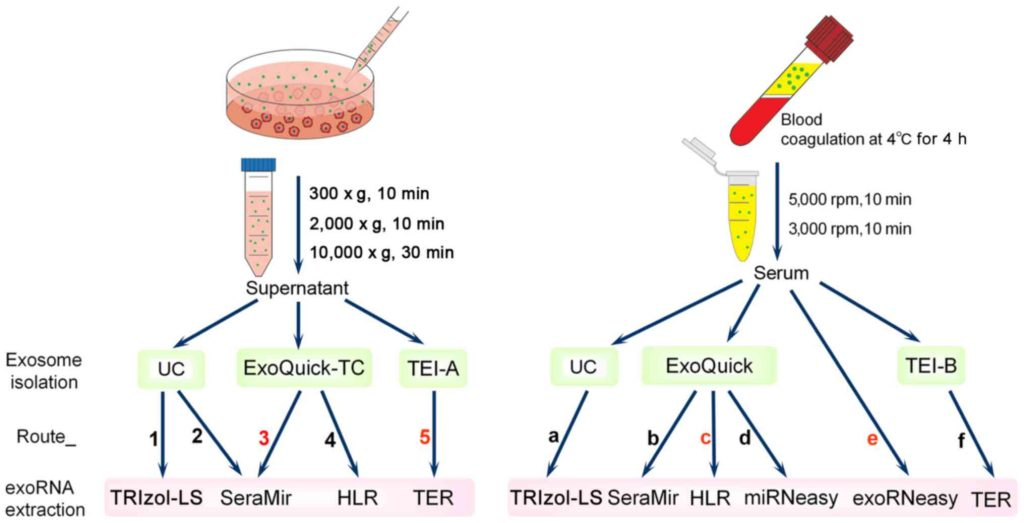 Figure 1: Complete workflow of exosome extraction and analysis.
Starting from cell culture supernatant, sequential centrifugation removes cells and debris, followed by exosome enrichment via ultracentrifugation or commercial kits, and final RNA extraction, protein analysis, or functional assays. Using specialized serum-free medium is the critical first step to ensure exosome purity and avoid serum contamination.
Why is serum a "hidden killer" in exosome research?
To understand the value of specialized medium, we must first recognize the "triple hazards" of fetal bovine serum in exosome research.
Serum contains massive endogenous exosomes
Fetal bovine serum itself is a "rich mine" of exosomes. Each milliliter of FBS contains approximately 10¹²-10¹³ particles, and these bovine-derived exosomes:
- Contaminate cell-secreted exosomes: Cause mixed species origins, making it impossible to distinguish human and bovine signals
- Interfere with quantitative analysis: NTA cannot differentiate cellular exosomes from serum exosomes, leading to artificially high yields
- Confound proteomics: Bovine serum proteins dominate mass spectrometry analysis, masking cellular exosomal proteins
"Background noise" from serum proteins
Even after removing most serum exosomes via ultracentrifugation, the high protein concentration (30-50mg/mL, mainly BSA) in FBS still:
- Clog separation columns: Cause non-specific adsorption and peak distortion in Size Exclusion Chromatography (SEC)
- Interfere with electron microscopy: Albumin forms background grids during negative staining, obscuring exosomal vesicle structures
- Inhibit downstream functional assays: High-concentration albumin competes with exosomes for target cell receptors, disrupting uptake experiments
Uncontrolled variables in serum components
The composition of FBS varies drastically between batches and brands:
- Fluctuating exosome content: Exosome concentrations in different FBS batches can differ by more than 10-fold
- Growth factor variability: Growth factor levels in serum affect cellular secretory status, leading to irreproducible experiments
- Contamination risks: Serum may contain mycoplasma, viruses, and other contaminants, impairing cell status and exosome quality
How does specialized serum-free medium solve these challenges?
Exosome-specific serum-free medium achieves "eliminating impurities and retaining authenticity" through three core technical strategies:
Precise nutritional replacement
Despite removing serum, purified components such as pharmaceutical-grade albumin, transferrin, and insulin maintain cells':
- Viability: Cells maintain high activity for 24-48 hours under serum-free conditions
- Secretory function: Exosome secretion levels are comparable to or even higher than serum-containing culture
- Phenotypic stability: Avoids interference of complex serum factors on cellular stress status and secretory phenotypes
Exosome secretion optimization
The formulation excludes serum components (e.g., certain complement factors) that inhibit exosome release, while optimized energy metabolism support promotes cells to produce more "pure" exosomes. Studies show that exosome yields of certain cell lines can increase by 2-5 folds in specialized serum-free medium, with significantly improved purity.
Experimental reproducibility assurance
Chemically defined formulations eliminate serum batch variations, ensuring:
- Comparable data across laboratories: Highly consistent results with the same formulation
- Stable longitudinal studies: Long-term experiments (e.g., drug treatment time-courses) are unaffected by serum batch changes
- Convenient regulatory filing: Clinical-grade exosome production requires complete component records, and serum-free formulations better meet GMP requirements
Which experimental scenarios require specialized serum-free medium?
Exosome proteomics research
This is the application scenario with the highest exosome purity requirements. Mass spectrometry is extremely sensitive to contaminants, and nanogram-level serum albumin can mask picogram-level low-abundance exosomal proteins.
Specialized serum-free medium ensures:
- High-purity exosome preparation: Reduces contamination from serum proteins such as albumin and complement
- Accurate protein quantification: Avoids interference of serum proteins with BCA or Bradford assays
- Reliable differential analysis: Consistent background and low false-positive rates when comparing exosomal protein profiles of different treatment groups
Exosomal RNA (miRNA/mRNA) research
Serum contains abundant free RNA and RNA-binding proteins, which severely interfere with exosomal RNA extraction and quantification:
- Avoids serum miRNA confusion: FBS is rich in conserved miRNAs such as miR-122 and miR-99a, which mix with cellular exosomal miRNAs
- Improves RNA quality: Serum-free medium reduces RNase load and protects exosomal RNA integrity
- Accurate functional validation: Exogenous miRNAs do not interfere with result interpretation in cell uptake assays
Clinical-grade exosome production
For exosome products intended for clinical trials (e.g., stem cell exosome therapy, tumor vaccines), medium compliance is critical:
- Regulatory requirements: FDA and NMPA mandate serum-free or chemically defined media for cell therapy products
- Safety assessment: Eliminates transmission risks of animal-derived pathogens such as Bovine Spongiform Encephalopathy (BSE)
- Batch consistency: Chemically defined formulations facilitate the establishment of Critical Quality Attributes (CQA) and Critical Process Parameters (CPP)
Exosome Collection and Storage Reference
| Culture Vessel | Medium Volume |
|---|---|
| 6-well plate | 3mL/well |
| 60mm dish | 5mL |
| 100mm dish | 10mL |
| 150mm dish | 15mL |
Recommended Absin Exosome-Specific Serum-Free Media
| Cat. No. | Product Name | Size |
|---|---|---|
| abs9430 | Exosome-Specific Serum-Free Medium | 500mL |
| abs9774 | Exosome-Specific Serum-Free Medium (with Growth Factors) | 500mL |
Conclusion
Exosome-specific serum-free medium represents a key tool for the transition of extracellular vesicle research from "extensive" to "refined". In cutting-edge fields such as liquid biopsy, cell therapy, and drug delivery, exosome purity, consistency, and reproducibility are core elements determining research value and clinical translation potential. Mastering the correct use of specialized serum-free medium establishes a quality advantage at the starting point of exosome research, laying a solid foundation for subsequent analysis and applications.
Contact Absin
Absin provides antibodies, proteins, ELISA kits, cell culture, detection kits, and other research reagents. If you have any product needs, please contact us.
| Absin Bioscience Inc. worldwide@absin.cn |
 Follow us on Facebook: Absin Bio Follow us on Facebook: Absin Bio |