

- Cart 0
- English
DNase I (Deoxyribonuclease I) — The "DNA Scavenger" in Molecular Biology Experiments
May 09, 2026
Clicks:71


In the microscopic world of life, DNA is like an ancient scripture recording life codes. There is an enzyme that can precisely "cut" this scripture — Deoxyribonuclease I (DNase I). First isolated from bovine pancreas in the 1950s, DNase I has become an indispensable basic tool enzyme in modern molecular biology laboratories.
DNase I: More Than Molecular Scissors, A Precise DNA Disassembler
DNase I is an endonuclease that specifically hydrolyzes the phosphodiester bonds of DNA. Simply put, its core function is to cleave long DNA strands into monodeoxyribonucleotides or oligodeoxyribonucleotide fragments with 5'-phosphate groups and 3'-hydroxyl terminals. Acting as a precise disassembler, it efficiently digests single-stranded and double-stranded DNA while leaving RNA intact (most DNase I products are RNase-free and do not degrade RNA).
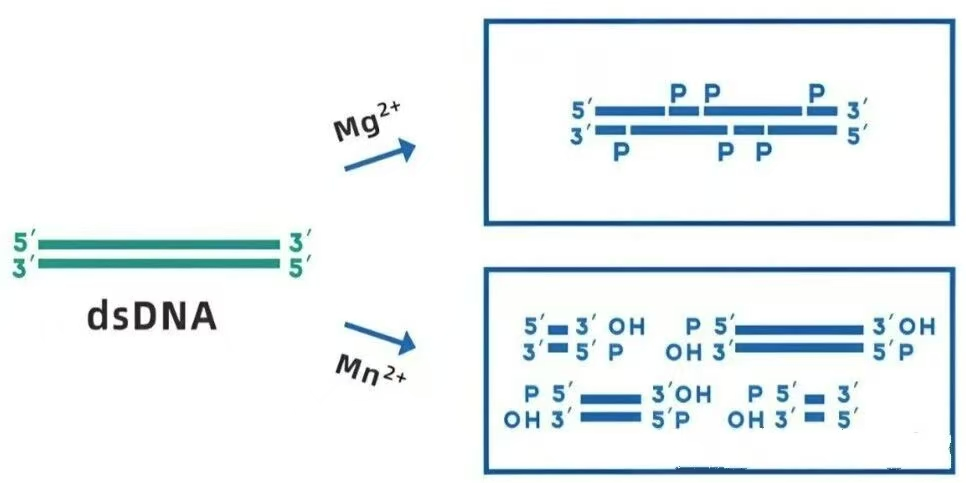
Unlike conventional nucleases with single functions, the activity of DNase I is uniquely regulated: it is strictly calcium-dependent and can be activated by magnesium ions or divalent manganese ions. In the presence of magnesium ions, it randomly cleaves any site on double-stranded DNA; in the presence of divalent manganese ions, it cuts both DNA strands at the same position to form blunt ends or sticky ends with 1-nt overhangs. This flexible cleavage property enables it to meet personalized requirements of various experiments, making it a versatile reagent indispensable in molecular biology research.
II. DNase I: An All-Round Assistant Penetrating Molecular Biology Research
Whether for basic experiments or advanced research, DNase I plays an irreplaceable role. Its applications cover nucleic acid purification, protein-DNA interaction research, genomic analysis and many other fields, demonstrating unique value in every experimental scenario.
1. Scavenger for RNA Preparation: Eliminate Genomic DNA Contamination to Ensure Experimental Accuracy
Genomic DNA contamination is a common problem during RNA extraction. DNase I is the standard reagent to solve this issue. It specifically degrades contaminating DNA without damaging RNA, protecting RNA samples like a professional scavenger. RNA derived from cells and tissues, as well as in vitro transcribed RNA, can be treated with DNase I to remove residual DNA, ensuring the accuracy of downstream experiments.
2. Detector for Protein-DNA Interaction: Core Reagent for DNase I Footprinting
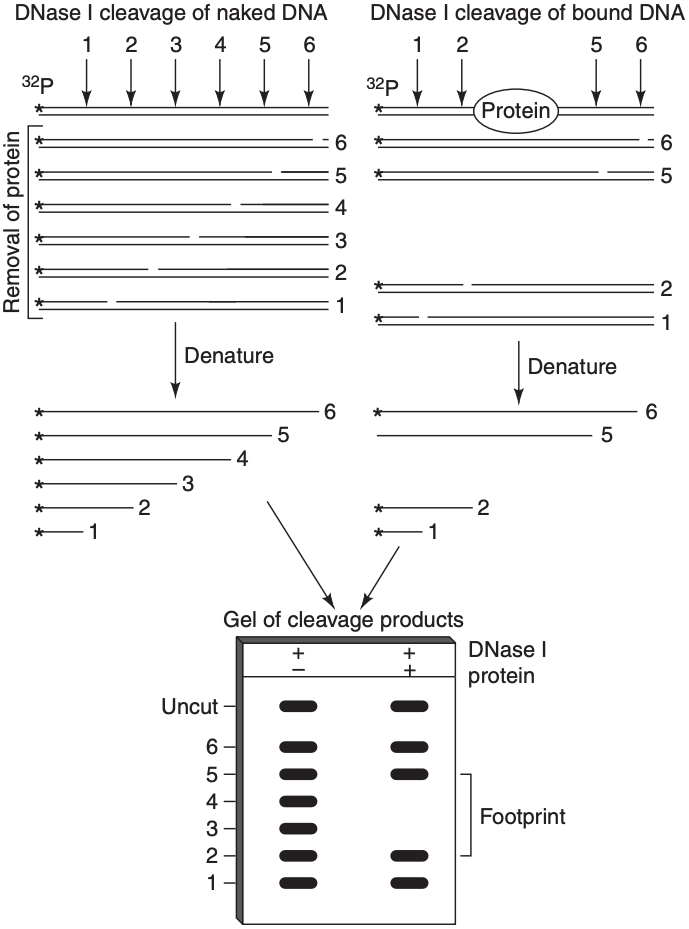
Mapping protein-DNA binding sites is the key to deciphering gene regulatory mechanisms. DNase I footprinting is a widely adopted technique, and DNase I serves as the core reagent of this method. When proteins specifically bind to DNA, they protect the bound DNA regions from DNase I cleavage; unbound DNA regions are randomly digested into fragments of varying lengths. These fragments are separated by electrophoresis and visualized, presenting a blank region on the gel — this refers to the protein binding site, just like a "footprint" left by DNase I. It helps researchers precisely locate protein-DNA interaction regions and uncover the mysteries of gene regulation.
3. Ideal Partner for In Vitro Transcription and DNA Labeling: Facilitate High-Purity Product Preparation
In in vitro transcription assays, residual template DNA after RNA synthesis increases the difficulty of RNA purification and impairs product purity. At this point, DNase I efficiently degrades template DNA to obtain high-purity RNA products, supporting downstream experiments such as protein translation and RNA structural analysis.
In addition, DNase I can work synergistically with DNA Polymerase I to achieve DNA labeling via nick translation. It randomly introduces nicks into DNA strands, and DNA Polymerase I fills the nicks and incorporates labeled nucleotides, finally preparing high-specific-activity nucleic acid probes for nucleic acid hybridization, gene mapping and other experiments.
4. Helper for Genomics and Cell Experiments: Expand Research Boundaries
In genomics research, DNase I is commonly used to construct libraries of randomly overlapping DNA insert fragments, laying a foundation for gene cloning and sequencing analysis. Meanwhile, it is applied in chromatin accessibility analysis — DNase I hypersensitive sites (DHSs) are open regulatory regions on chromatin. Combined with DNase-seq technology, DNase I cleavage enables genome-wide identification of DHSs and reveals the distribution of gene regulatory elements.
DNase I also has unique applications in cell experiments: during tissue digestion and primary cell preparation, cell lysis releases viscous genomic DNA and causes cell aggregation. DNase I hydrolyzes such DNA to reduce cell clumping, improving the efficiency of single-cell preparation and the success rate of cell culture. Moreover, in TUNEL assays for cell apoptosis detection, DNase I can artificially fragment DNA to simulate the DNA cleavage pattern of apoptotic cells, acting as a positive control to verify the reliability of experimental methods.
III. DNase I Inactivation Methods: Timely Termination to Guarantee Downstream Experiments
Complete inactivation of DNase I is mandatory after enzymatic digestion. Residual DNase I will continuously cleave DNA in subsequent experiments and lead to experimental failure. Four commonly used inactivation methods are available for selection according to downstream experimental requirements.
1. Heat Inactivation (Most Commonly Used, Simple Operation)
Add EDTA to the reaction system at a final concentration of 2.5-5 mM, then incubate at 65-75°C for 10 minutes to completely inactivate DNase I. This mild method causes no damage to RNA and is suitable for downstream experiments such as RT-PCR and RNA sequencing. Note that high temperature will induce RNA hydrolysis without chelating agents, so EDTA addition is prerequisite.
2. Chemical Extraction Inactivation (Suitable for High-Purity Sample Preparation)
Extract the reaction system with phenol/chloroform. DNase I partitions into the organic phase while nucleic acids (RNA/DNA) remain in the aqueous phase. Collect the supernatant after centrifugation to obtain DNase I-free samples. This method achieves thorough inactivation and is ideal for experiments requiring high sample purity, though the operation is relatively cumbersome and organic phase contamination should be avoided.
3. Column Purification Removal (Efficient and Convenient)
Purify post-reaction samples using nucleic acid purification columns (e.g., RNA purification columns). During purification, DNase I is adsorbed onto the column matrix while nucleic acids are eluted, realizing complete removal of DNase I. This method features simple operation and high efficiency, suitable for large-scale sample processing.
4. Inhibitor Mediated Suppression (Temporary Termination, Not Suitable for Long-Term Storage)
Add DNase I inhibitors to the reaction system, such as more than 0.1% SDS, DTT, β-mercaptoethanol and other reducing agents, to rapidly inhibit DNase I activity. This method only terminates the reaction temporarily; inhibitors may interfere with downstream experiments, so it is not applicable for samples requiring long-term storage or sensitive subsequent assays.
IV. Protocol for DNase I Application (Taking DNA Removal from RNA Samples as an Example)
1. Prepare the reaction system in an RNase-free tube according to the following ratio (abs60539):
|
Component |
Dosage |
|
RNA |
X μg |
|
10 × DNase I Buffer |
1 μL |
|
DNase I, RNase-free(5U/μL) |
1 U per μg RNA |
|
ddH2O |
Up to 10 μL |
2. Incubate at 37°C for 15 min.
3. Add EDTA to a final concentration of 5 mM to terminate the reaction, heat at 65°C for 10 minutes to inactivate DNase I. The sample can be directly used for subsequent transcription experiments.
Acting as a scavenger in RNA purification, a detector for protein-DNA interaction, and an assistant in genomics research, DNase I has become a core indispensable tool in molecular biology laboratories with unique enzymatic properties and extensive application scenarios. Though its basic function is simply DNA cleavage, it removes obstacles for numerous experiments and helps researchers explore the mechanisms of gene regulation, cellular function and disease pathogenesis.
Product Recommendation
|
Cat. No. |
Product Name |
Specification |
|
abs60539 |
DNase I |
1KU/5KU |
Contact Absin
Absin provides antibodies, proteins, ELISA kits, cell culture, detection kits, and other research reagents. If you have any product needs, please contact us.
| Absin Bioscience Inc. worldwide@absin.cn |
 Follow us on Facebook: Absin Bio Follow us on Facebook: Absin Bio |