

- Cart 0
- English
How can exosomal miRNA extraction kits efficiently isolate trace nucleic acids?
May 07, 2026
Clicks:74


As vital mediators of intercellular communication, exosomes carry miRNAs that exhibit enormous potential in disease diagnosis, prognostic evaluation, and therapeutic target discovery. However, exosomal miRNA extraction faces challenges such as limited sample volume, low miRNA abundance, and severe impurity interference. The Exosomal miRNA Extraction Kit provides a reliable solution for rapidly obtaining high-quality miRNAs from liquid samples through an optimized lysis system and high-efficiency purification technology.
What is Exosomal miRNA Extraction Kit?
The Exosomal miRNA Extraction Kit is a reagent system specifically designed for extracting exosomal miRNAs from liquid samples including serum, plasma, and saliva. Adopting high-quality ion membrane technology, the lysis buffer and elution buffer are optimized repeatedly to efficiently isolate and purify exosomal miRNAs.
Core components of the kit include: adsorption columns and collection tubes, lysis buffer, Carrier RNA, wash buffer, elution buffer, and digestion buffer. It is stable for 12 months when stored at room temperature (10-30°C), while digestion buffer and Carrier RNA must be stored at -20°C.
Compared with traditional methods, the kit delivers higher yield and superior purity of exosomal miRNAs, maximally removing contaminants such as proteins, pigments, and lipids. The purified miRNAs are directly applicable to various molecular biology experiments including RT-PCR, Real-Time RT-PCR, and molecular hybridization.
Why is Exosomal miRNA Extraction So Important?
Novel Biomarkers for Liquid Biopsy. As an important component of circulating nucleic acids, exosomal miRNAs feature excellent stability, strong tissue specificity, and non-invasive detection, making them ideal biomarkers for early tumor diagnosis, cardiovascular disease risk assessment, and neurological disease monitoring.
Gene Expression Regulation Research. Exosomal miRNAs regulate target gene expression by transferring to recipient cells, participating in diverse biological processes including cell proliferation, differentiation, and apoptosis. Extracting high-quality miRNAs is a prerequisite for studying their functions and mechanisms.
Clinical Translational Applications. Exosomal miRNA detection is characterized by easy sample acquisition and dynamic monitoring, presenting broad clinical application prospects in precision medicine and individualized therapy.
What are the Technical Advantages of This Kit?
Simple and Rapid Operation is the primary feature. Exosomal miRNA extraction can be completed in just over 20 minutes, greatly shortening the experimental cycle and improving sample processing throughput compared with the hours-long processing time of traditional methods.
High Purity of Extracted miRNAs. The A260/A280 ratio reaches 1.8-2.0 with no residual PCR inhibitors, ensuring the accuracy of subsequent quantitative PCR and sequencing experiments.
Higher Yield. 20% higher than similar domestic products, which is particularly valuable for trace samples and maximizes the utilization of limited clinical resources.
Thorough Impurity Removal. The optimized lysis and washing system effectively removes impurities such as proteins, pigments, and lipids, reducing interference from these contaminants in downstream experiments.
What Experimental Scenarios Can Be Applied?
Tumor Liquid Biopsy is the core application of exosomal miRNA extraction. Extract exosomal miRNAs from serum or plasma of cancer patients, screen tumor-specific miRNA markers via RT-qPCR or high-throughput sequencing for early screening, efficacy monitoring, and recurrence warning.
Cardiovascular Disease Research: Exosomal miRNAs participate in the pathological processes of atherosclerosis, myocardial infarction and other diseases. Extracting circulating exosomal miRNAs helps reveal disease mechanisms and discover therapeutic targets.
Neurological Disease Diagnosis faces the challenge of difficult access to brain tissue samples. Exosomal miRNAs can cross the blood-brain barrier, and extracting brain-derived exosomal miRNAs from peripheral blood provides a new approach for diagnosing neurodegenerative diseases and brain tumors.
Infectious Disease Monitoring: Changes in host and pathogen-derived exosomal miRNAs after pathogen infection reflect infection status and immune response, used for infection diagnosis and prognostic evaluation.
Drug Development: Exosomal miRNA extraction is used to evaluate drug effects on intercellular communication and screen candidate drugs that regulate exosomal miRNA secretion or function.
Basic Scientific Research: Extraction of exosomal miRNAs from cell culture supernatants is used to study mechanisms of intercellular signal transduction, stem cell differentiation regulation, immune regulation, etc.
How to Correctly Perform Exosomal miRNA Extraction?
Preparation:
Prepare absolute ethanol and RNase-free 1.5mL centrifuge tubes by yourself. Take the wash buffer and add absolute ethanol to a final concentration of 80% (e.g., add 8mL absolute ethanol to 2mL wash buffer), mix thoroughly.
Lysis Step:
Take an RNase-free 1.5mL centrifuge tube, add 150μL exosome sample and 3μL Carrier RNA, mix evenly. As a carrier RNA, Carrier RNA improves the recovery rate of trace miRNAs. Then add 100μL lysis buffer and 10μL digestion buffer, vortex for 10 seconds to mix thoroughly, and incubate in a 65°C water bath for 10 minutes.
Binding Step:
Add 0.55mL absolute ethanol and mix gently by inversion. Translucent suspensions do not affect miRNA extraction and subsequent experiments. Transfer the above solution to the adsorption column, centrifuge at 12,000rpm, 4°C for 1 minute, and discard the waste liquid in the collection tube.
Washing Step:
Place the adsorption column back into the collection tube, add 500μL wash buffer to the column, let stand for 2 minutes, centrifuge at 12,000rpm, 4°C for 1 minute, and discard the waste liquid. Repeat the washing once to ensure thorough impurity removal.
Elution Step:
Take elution buffer at 30μL per sample, place it in a sterile 1.5mL centrifuge tube, and preheat at 65°C. Place the adsorption column back into the collection tube, centrifuge at 12,000rpm, 4°C for 2 minutes to remove residual wash buffer. Take out the adsorption column, place it into a new RNase-free 1.5mL centrifuge tube, add preheated 30μL elution buffer, let stand for 2 minutes, centrifuge at 12,000rpm, 4°C for 1 minute, and collect the miRNA solution.
Storage:
The extracted miRNAs can be stored at -70°C or directly used for the next experiment.
What are the Key Precautions During Use?
- Strict RNase Contamination Prevention. Wear disposable clean gloves and masks during the experiment, and use treated RNase-free containers and RNase-free ultrapure water. RNase is ubiquitous and extremely stable; contamination will cause miRNA degradation.
- Wash Buffer Preparation. Mix thoroughly after adding ethanol to the wash buffer, preferably prepare fresh before use, and prepare an appropriate amount based on the number of samples each time. Insufficient ethanol concentration affects washing efficiency, while excessive concentration may cause miRNA loss.
- Sample Storage. If the extracted miRNAs are not used temporarily, store them at -70°C, and add an RNA protectant appropriately (2μL for 30μL RNA solution generally) to prevent degradation caused by repeated freeze-thaw cycles.
- Function of Carrier RNA. As an exogenous RNA carrier, Carrier RNA co-precipitates or co-adsorbs with trace miRNAs, significantly improving recovery. Note that Carrier RNA may interfere with some downstream applications such as RNA sequencing; evaluate its use based on experimental needs.
- Temperature Control. The 65°C water bath in the lysis step ensures sufficient protein denaturation and nuclease inactivation; preheating the elution buffer helps improve miRNA elution efficiency.
- Centrifugation Conditions. Centrifuge strictly at the recommended speed and time to ensure complete liquid passage through the adsorption column, while avoiding excessive centrifugation that causes the adsorption membrane to dry and crack.
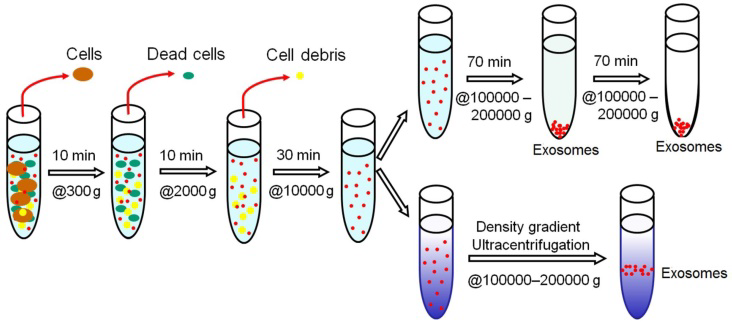
Schematic diagram of exosome isolation and miRNA extraction process
Conclusion
The Exosomal miRNA Extraction Kit provides high-quality nucleic acid materials for liquid biopsy and molecular biology research through an optimized lysis system, high-efficiency ion membrane purification technology, and a simple operation process. From tumor biomarker discovery to cardiovascular disease risk assessment, from basic mechanism research to clinical translational applications, the quality of exosomal miRNA extraction directly determines the success of subsequent experiments. Mastering correct operating procedures, strictly controlling RNase contamination, and optimizing sample processing and storage conditions will ensure the acquisition of high-yield and high-purity exosomal miRNAs. With the advancement of exosome research and liquid biopsy technology, standardized exosomal miRNA extraction methods will become an important technical support for promoting the development of precision medicine.
Recommended Absin Exosomal miRNA Extraction Kit:
| Cat. No. | Product Name | Size |
|---|---|---|
| abs60565 | Exosomal miRNA Extraction Kit | 50T/100T |
Contact Absin
Absin provides antibodies, proteins, ELISA kits, cell culture, detection kits, and other research reagents. If you have any product needs, please contact us.
| Absin Bioscience Inc. worldwide@absin.cn |
 Follow us on Facebook: Absin Bio Follow us on Facebook: Absin Bio |