

- Cart 0
- English
Why do different types of agarose have irreplaceable divisions of labor in molecular biology experiments?
April 28, 2026
Clicks:74


Agarose is a linear polysaccharide extracted from agar, composed of alternating 1,3-linked β-D-galactofuranose and 1,4-linked 3,6-anhydro-α-L-galactofuranose residues. As one of the most fundamental semi-solid supports in biochemistry laboratories, agarose forms a three-dimensional reticular gel structure, serving as an ideal molecular sieve matrix for the separation and purification of biomacromolecules such as nucleic acids and proteins. Unlike conventional agar, high-purity agarose removes charged contaminants including agaropectin and pyruvate during production, resulting in charge-neutral products with low background and high transparency. Based on differences in gel strength, electroendosmosis (EEO) and melting/gelling temperature, agarose is classified into high-strength, low-melting, low-EEO and electrophoresis-grade types, each with unique applications in nucleic acid analysis, protein electrophoresis, cell cloning and virological research.
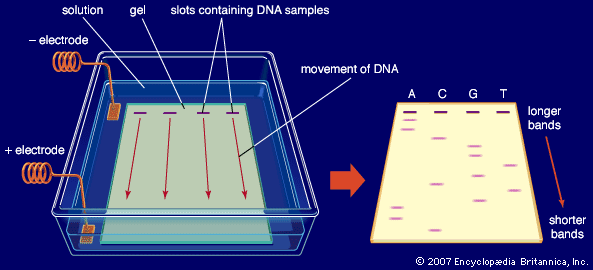
Schematic Diagram of Agarose Gel Electrophoresis Principle
Technical Differences Among Various Agarose Types
According to distinct molecular structures and physicochemical properties, laboratory-grade agarose is mainly divided into four major categories:
High-Strength Agarose
Optimized extraction process endows it with ultra-high gel strength, gel strength ≥ 1500 g/cm² at 1% concentration, far exceeding standard agarose. It features EEO value < 0.15, gelling temperature of 35–37°C and melting temperature of 87–89°C. Its superior mechanical stability enables routine electrophoresis operations and advanced applications requiring high structural rigidity, such as microsphere preparation.
Low-Melting Point Agarose
Chemical modification with hydroxyethyl and methoxy groups on polysaccharide chains significantly alters phase transition temperatures. It has a gelling temperature of 27–31°C and melting temperature ≤ 65°C, which is lower than the melting point of most double-stranded DNA (approximately 70–90°C). This low-temperature reversible property allows researchers to liquefy gels without disrupting double-stranded DNA structures for native DNA recovery.
Low-Electroendosmosis Agarose (ME Agarose)
Electroendosmosis (EEO) refers to the reverse liquid flow generated by negatively charged residues in agarose attracting cations under electric fields, which retards DNA migration. Deep purification removes charged groups to achieve EEO ≤ 0.09, accelerating DNA mobility and improving resolution, making it the optimal choice for Northern and Southern blot hybridization.
Electrophoresis-Grade Agarose
Formulated for routine electrophoresis, with gel strength ≥ 750 g/cm², EEO of 0.15 and sulfate content ≤ 0.15%. Cost-effective and versatile, it is widely used for daily DNA/RNA separation and preliminary molecular analysis.

Correlation Between Agarose Concentration and DNA Separation Range
Agarose Selection Based on Experimental Requirements
Nucleic Acid Preparation & Recovery experiments prioritize low-melting point agarose. For DNA fragment recovery for downstream cloning, sequencing or restriction digestion, low-melting agarose can be gently liquefied at 65°C, whereas standard agarose requires temperatures above 90°C, which may cause DNA fragmentation or depurination damage.
High-Molecular-Weight DNA Separation requires high-strength agarose. Separation of large DNA fragments (5–60 kb) demands low-concentration gels (0.3–0.6%). Ordinary agarose exhibits poor mechanical stability at low concentrations and is prone to fracture, while high-strength agarose maintains intact structural integrity.
High-Resolution Nucleic Acid Analysis recommends low-EEO agarose. In Southern and Northern blotting, low electroendosmosis ensures sharp nucleic acid bands and low background, enhancing the specificity of hybridization signals.
Protein Immunodiffusion Assays (e.g., Ouchterlony double diffusion, radial immunodiffusion) must adopt low-EEO or electrophoresis-grade agarose. Proteins are highly sensitive to gel purity, and residual charged groups will interfere with the formation of antigen-antibody precipitin lines.
Core Applications of Agarose in Molecular Biology
1. Nucleic Acid Analysis and Preparative Electrophoresis
This is the most common application. Agarose concentration is selected according to target fragment size:
- 0.3–0.6%: Separation of large DNA fragments (5–60 kb)
- 0.8–1.0%: Routine PCR product separation (0.5–10 kb)
- 1.2–2.0%: Small fragment DNA (0.1–3 kb) or total RNA analysis
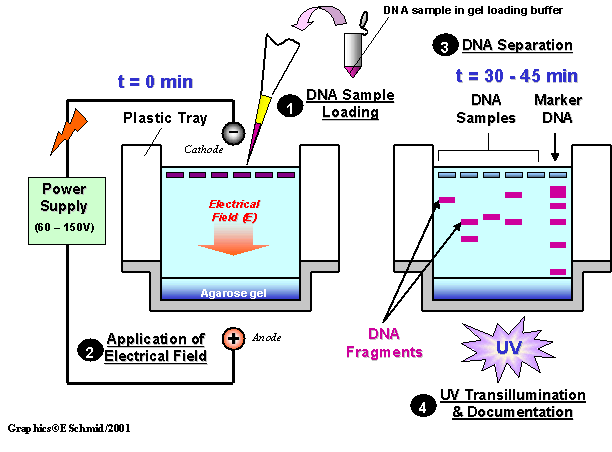
Standard Operating Procedure for Agarose Gel Electrophoresis
2. Blot Hybridization (Southern/Northern Blot)
Low-EEO agarose gels provide high electrophoretic mobility with rapid DNA migration and compact band distribution. Separated nucleic acids are transferred to nylon membranes via capillary or electro-transfer for probe hybridization, applied in gene expression profiling and genomic structural research.
3. Viral Plaque Assay
Low-melting agarose is an essential material for viral titration and clonal purification. Viral samples are mixed with liquefied agarose and overlaid on cell monolayers; viral infection induces localized cytopathic regions (plaques). Low-melting agarose remains liquid at 37°C for uniform mixing and forms a semi-solid barrier to limit viral diffusion, ensuring distinct plaque morphology.
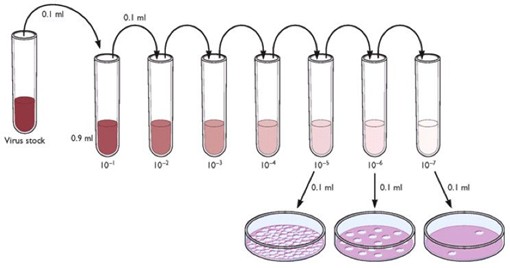
Viral Plaque Assay Experiment
4. Cell Cloning and Tissue Culture
Low-melting agarose supports soft agar colony formation assays to detect anchorage-independent cell growth, a key indicator for evaluating malignant transformation and tumorigenic potential. Its low gelling temperature (30°C) is also compatible with thermosensitive cell culture systems.
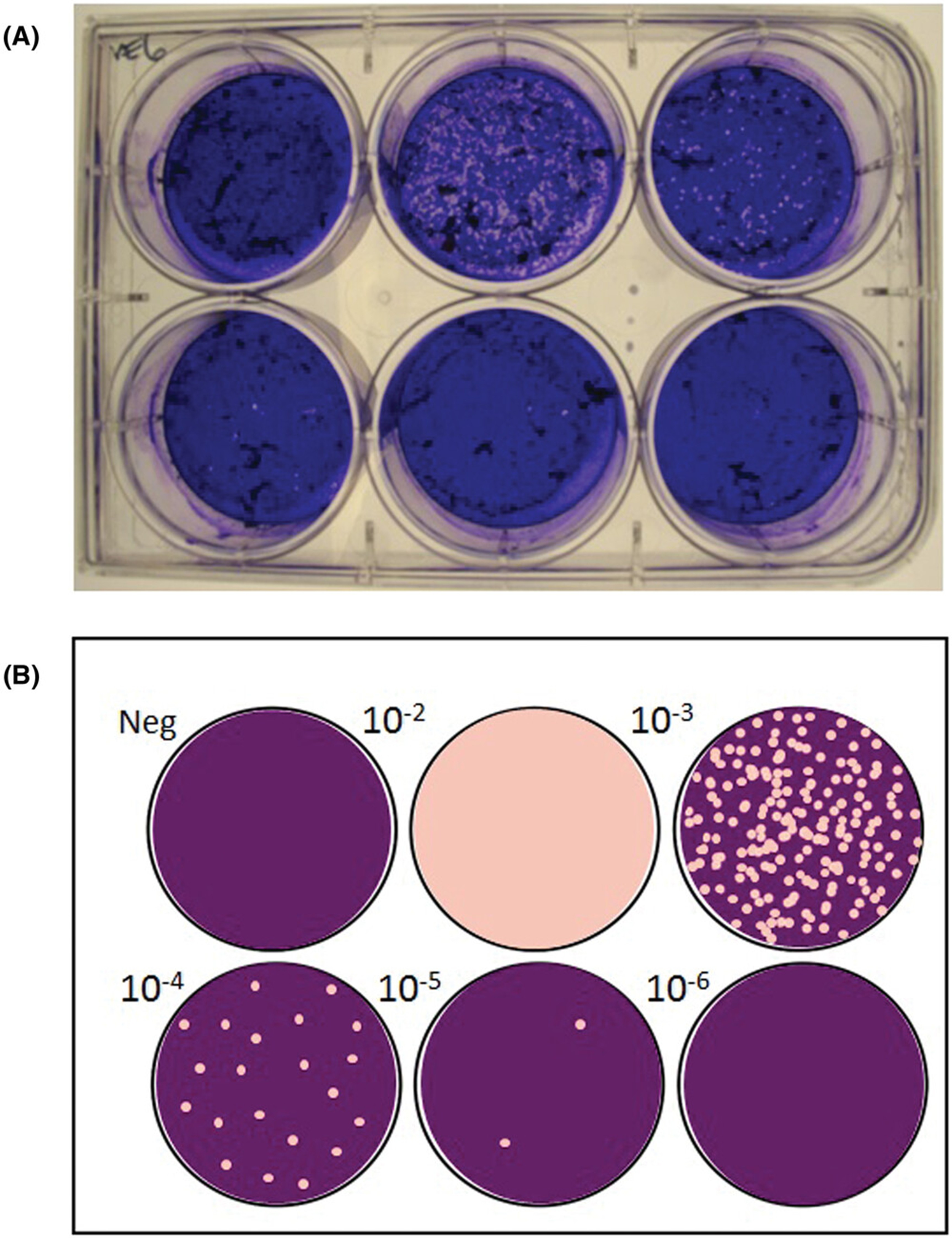
Schematic Diagram of Soft Agar Cloning Assay
5. Protein Immunodiffusion Analysis
In radial immunodiffusion and Ouchterlony double immunodiffusion, agarose gel acts as a stable antibody matrix. Antigens diffuse radially from sample wells and form precipitin rings with embedded antibodies; ring diameter is positively correlated with antigen concentration, enabling quantitative detection of serum proteins and antibody titer determination.
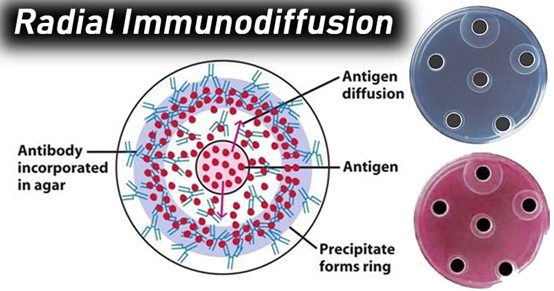
Principle of Radial Immunodiffusion
6. Microsphere Preparation and Chromatographic Support
High-strength agarose can be processed into agarose beads, widely used as chromatographic fillers for affinity chromatography and size-exclusion chromatography of proteins and nucleic acids. Excellent mechanical strength guarantees structural stability under column fluid pressure.
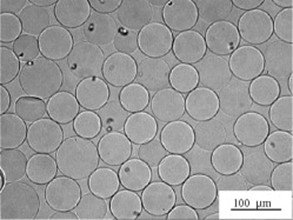
Agarose Microsphere Preparation
Operational Guidelines and Quality Control
Key Steps for Gel Preparation:
- Weighing and Dispersion: Weigh agarose powder according to target concentration (e.g., 1 g agarose per 100 mL buffer for 1% gel) and dissolve in TAE or TBE electrophoresis buffer
- Thermal Melting: Heat via water bath or microwave until fully dissolved to prevent overflow from boiling
- Temperature Control: Cool to 60°C (70°C for gels above 2% concentration), pour into casting trays and insert combs immediately
- Buffer Consistency: Use identical buffer systems for gel preparation and electrophoresis tank to avoid band distortion caused by ionic strength discrepancy
Interpretation of Quality Indicators:
- Gel Strength: Reflects mechanical rigidity; high-strength agarose is suitable for low-concentration large fragment separation
- EEO Value: Lower values ensure faster nucleic acid migration and lower background, ideal for blot hybridization
- Sulfate Content: Critical impurity index; high-purity agarose features sulfate ≤ 0.1%
- Gelling/Melting Temperature: Core parameter for low-melting agarose to ensure operation below DNA denaturation temperature
Troubleshoot Common Issues:
Gel Fragility: Caused by low agarose concentration or insufficient mechanical strength; replace with high-strength agarose
DNA Band Smearing: Check excessive EEO value and switch to low-EEO grade agarose
High Background Fluorescence: Resulting from insufficient purity and fluorescent impurities; select high-purity electrophoresis-grade agarose
Rational selection of agarose types and experimental condition optimization support diverse molecular biology applications, ranging from routine PCR detection and genomic analysis to viral titration and protein immunological research, providing stable and reliable technical support for laboratory workflows.
Absin Agarose Product Recommendation
Contact Absin
Absin provides antibodies, proteins, ELISA kits, cell culture, detection kits, and other research reagents. If you have any product needs, please contact us.
| Absin Bioscience Inc. worldwide@absin.cn |
 Follow us on Facebook: Absin Bio Follow us on Facebook: Absin Bio |