

- Cart 0
- English
Why can dimethyl sulfoxide (DMSO) serve as a universal solvent and cytoprotective agent across multiple disciplinary fields?
April 24, 2026
Clicks:74


Dimethyl Sulfoxide (DMSO), also known as methyl sulfoxide, is a highly polar aprotic organic solvent. The sulfur-oxygen double bond (S=O) in its molecular structure confers unique physicochemical properties: it is miscible with both polar solvents such as water, ethanol, and acetone, and non-polar solvents such as chloroform and benzene. With a melting point of 18.4°C, it exists as a colorless, transparent or viscous liquid at room temperature and solidifies into crystals at low temperatures. This "universal solvent" characteristic, combined with its exceptional cell membrane permeability and low toxicity, makes DMSO an indispensable basic reagent in cell biology, molecular biology, analytical chemistry, and organic synthesis.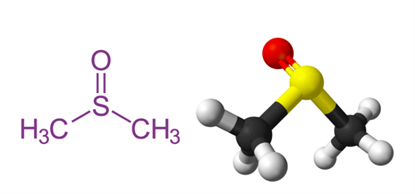
What are the differences in applications of DMSO with different purity grades?
According to different experimental requirements, DMSO is classified into multiple grades based on purity and quality control standards. Incorrect selection may lead to experimental failure or equipment damage:
AR Grade (Analytical Reagent, ≥99%):
Suitable for general organic synthesis and routine chemical experiments. As a reaction medium and solvent, it dissolves most organic and inorganic compounds, but may contain trace impurities that interfere with precise biological experiments.
Molecular Biology Grade (≥99.9%):
Specially designed for PCR and DNA/RNA manipulation, it undergoes strict filtration, sterilization, and nuclease/protease activity testing. Used as a co-solvent for PCR reactions, DNA solubilization, or an additive in molecular biology reactions to ensure no nuclease contamination.
Cell Culture Grade (≥99%, Sterile):
Sterile packaging with moisture content controlled below 0.1%. Dedicated for the preparation of cell freezing medium (usually at a final concentration of 5-10%) as a vitrification cryoprotectant, ensuring no pyrogen and microbial contamination.
Anhydrous Grade (≥99.5%, Moisture <0.01%):
Suitable for moisture-sensitive organic synthesis, Grignard reactions, lithium aluminum hydride reductions, etc. Also used in specific anhydrous cell cryopreservation studies.
HPLC Grade/Chromatographic Pure (≥99.8%):
Used for HPLC mobile phase preparation, GC stationary liquid, or UV spectroscopic solvent. Low UV absorption background (UV cut-off 268 nm) ensures detection sensitivity and stable baseline.
Deuterated DMSO (DMSO-d6, 99.8%):
Hexadeuterated dimethyl sulfoxide, a standard solvent for nuclear magnetic resonance (NMR). Deuteration rate >99.5% with extremely low residual proton signals, suitable for precise structural analysis such as ¹H NMR and ¹³C NMR.
How does DMSO exert vitrification protection in cell cryopreservation?
In cell cryopreservation, DMSO is the most classic and widely used cryoprotectant, typically added to freezing medium at a final concentration of 5-10%. Its protective mechanism is based on the following molecular actions:
Permeation Protection Mechanism:
DMSO has strong cell membrane permeability and can rapidly enter cells. During cooling, DMSO forms hydrogen bonds with water molecules, altering water crystallization behavior, lowering the solution freezing point, increasing extracellular fluid osmotic pressure, and reducing intracellular ice crystal formation.
Vitrification Effect:
High-concentration DMSO (usually combined with serum or BSA) promotes the formation of a glassy state (Vitrification) rather than a crystalline state in intracellular and extracellular solutions during rapid cooling. The glassy state is an amorphous solid that avoids mechanical damage to cell membranes and organelles by ice crystals, thereby preserving cell viability after long-term storage at -80°C or liquid nitrogen (-196°C).
Application Scope:
Widely used for cryopreservation of primary cells, subcultured cells, recombinant heteroploid cells, hybridoma cells, embryonic stem cells (ESC), and hematopoietic stem cells. Often mixed with BSA or FBS for additional nutritional protection.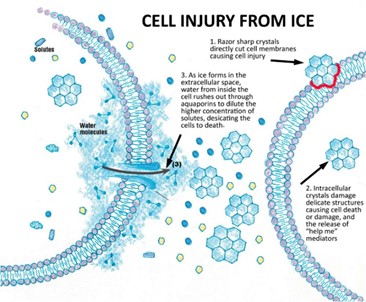
Why is DMSO added as a co-solvent in PCR reactions?
In polymerase chain reaction (PCR), DMSO acts as a critical PCR enhancer, especially for GC-rich templates or DNA fragments with complex secondary structures:
Unwinding Secondary Structures:
Certain DNA sequences (e.g., hairpins, stem-loops) form stable secondary structures that block DNA polymerase extension. DMSO lowers the melting temperature (Tm) of DNA duplexes, destabilizes double-stranded structures, inhibits secondary structure formation, and facilitates primer-template binding.
Improving Amplification Efficiency:
As a co-solvent, DMSO reduces the ionic strength dependence of the reaction system, optimizes the active conformation of DNA polymerase, enhances its template affinity, and improves the yield and specificity of PCR products.
Working Concentration:
Typically 1-10% (v/v) DMSO is added; concentrations above 10% may inhibit Taq polymerase activity and require optimization based on template complexity.
What role does DMSO play in analytical chemistry?
High-Performance Liquid Chromatography (HPLC):
As a mobile phase component or sample solvent, DMSO dissolves various polar compounds. Its low viscosity (vs. water) helps reduce system backpressure and improve separation efficiency. HPLC-grade DMSO ensures no particulate impurities, avoiding column clogging and baseline noise.
UV-Vis Spectroscopy:
DMSO exhibits excellent UV transmittance (cut-off wavelength 268 nm), making it suitable as a solvent for UV spectroscopic analysis to determine the concentration and spectral properties of UV-absorbing organic compounds.
Nuclear Magnetic Resonance (NMR):
Deuterated DMSO (DMSO-d6) is one of the most commonly used NMR solvents. Its chemical inertness, high solubility for most organic compounds, and a single, easily identifiable residual proton signal (δ 2.50 ppm) make it the preferred solvent for small molecule structural identification and quantitative analysis.
What safety and handling details require special attention when using DMSO?
Container Material Selection:
DMSO has strong solubilizing properties and cannot be used with polystyrene (PS), polyvinyl chloride (PVC), or polycarbonate (PC) containers, which may dissolve or release plasticizers. Use low-density polyethylene (LDPE), high-density polyethylene (HDPE), or polypropylene (PP) containers for storage and handling.
Filtration Compatibility:
Cellulose acetate membranes cannot be used for DMSO filtration as they dissolve. Polytetrafluoroethylene (PTFE, Teflon) or nylon membranes are recommended for sterile filtration.
Hygroscopicity and Storage:
DMSO is highly hygroscopic and rapidly absorbs moisture when exposed to air. It must be tightly sealed and stored in a dry environment. For anhydrous reactions, use promptly after opening or aliquot into dry vials.
Low-Temperature Solidification Handling:
With a melting point of 18.4°C, DMSO may solidify into a white solid in cold environments or winter. Incubate in a 25°C water bath for a short time to fully dissolve without affecting chemical properties.
Skin Permeation and Toxicity:
DMSO has exceptional skin permeability and can carry dissolved substances into the body. Wear lab coats, disposable gloves, and safety goggles during operation to avoid direct skin and eye contact. Although DMSO has relatively low toxicity, long-term or excessive exposure may cause skin irritation or other health issues.
By accurately matching purity grades with experimental requirements and strictly adhering to safe handling protocols, DMSO provides reliable solvent support and protective functions for a wide range of scientific applications from cell cryopreservation to precise analysis.
Absin Recommended Dimethyl Sulfoxide Products
| Cat. No. | Product Name | Size |
|---|---|---|
| abs9184 | Dimethyl Sulfoxide (AR Grade) | 500mL/1L |
| abs9187 | Dimethyl Sulfoxide (Cell Culture Grade) | 100mL |
| abs9189 | Dimethyl Sulfoxide (GC) | 250mL/2.5L |
| abs9185 | Dimethyl Sulfoxide (Anhydrous Grade) | 500mL |
| abs9188 | Dimethyl Sulfoxide (Molecular Biology Grade) | 250mL |
| abs9186 | Dimethyl Sulfoxide (HPLC) | 500mL |
| abs42075401 | Dimethyl Sulfoxide-¹³C₂ | 1g |
| abs42075402 | Dimethyl Sulfoxide-d6 | 25g |
Contact Absin
Absin provides antibodies, proteins, ELISA kits, cell culture, detection kits, and other research reagents. If you have any product needs, please contact us.
| Absin Bioscience Inc. worldwide@absin.cn |
 Follow us on Facebook: Absin Bio Follow us on Facebook: Absin Bio |