

- Cart 0
- English
Why can egg white albumin serve as a multifunctional tool protein in immunological and biochemical research?
April 22, 2026
Clicks:75


Chicken egg white albumin, also known as ovalbumin, egg white albumin, or OVA, is the major protein component of egg white, constituting approximately 54% of the total egg white protein content. As a phosphorylated glycoprotein, its polypeptide chain is composed of 385 amino acid residues with a molecular weight of 42.7 kDa. Including the carbohydrate moiety (1,428 g/mol) and phosphate ester group (1,600 g/mol), the total molecular weight reaches 44.3 kDa. Its acidic isoelectric point (pI) of 4.7 confers a net negative charge under physiological pH conditions. With its excellent water solubility, stable chemical properties, and abundant availability, ovalbumin is widely applied in immunology, biochemistry, and cell biology research. It serves both as a carrier protein for hapten conjugation to prepare immunogens and as a standard allergen for establishing allergic asthma animal models, while also functioning as a practical molecular weight indicator protein in protein electrophoresis.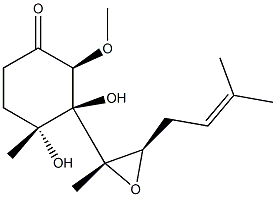
Ovalbumin Molecular Structure
How to Select Different Purity Grades of Ovalbumin?
According to varying experimental requirements, ovalbumin is classified into multiple grades based on purity and preparation methodology:
BR Grade (Biological Reagent Grade, ≥80%): Suitable for general biochemical research, clarifying agents, adhesives, colloidal protection, and microbiological studies. The purity is sufficient for routine experimental requirements with relatively lower cost.
High Purity Grade (≥90%): Further purified, suitable for electrophoresis experiments and use as a protein standard. Lower contaminant protein content yields clearer electrophoretic patterns.
Gold Label Grade (≥99.0%): Prepared with high purity for high-sensitivity immunoassays such as gold label antibody preparation. Minimal protein impurities ensure low background and high specificity.
Purified Grade (98%): Refined product specifically designed for research applications, with purity between high purity and gold label grades, meeting the requirements of most precision experiments.
Selection Recommendations: Gold label or purified grade is recommended for immunogen preparation and vaccine research; high purity grade can be used for routine SDS-PAGE molecular weight markers; BR grade is suitable for cell culture and microbiological studies.
Why Is It an Ideal Carrier Protein and Immunogen?
Carrier Protein Function:
Hapten molecules are small in molecular weight and exhibit weak immunogenicity when administered alone to animals, making it difficult to elicit effective antibody responses. Ovalbumin, as a macromolecular carrier, binds to haptens through chemical cross-linking (e.g., glutaraldehyde method, carbodiimide method) to form complete antigens with strong immunogenicity.
Advantageous Characteristics:
- Moderate Molecular Weight: The 44.3 kDa molecular weight provides sufficient immunogenicity without being excessively large, which could cause solubility issues
- Chemically Stable Structure: Abundant amino and carboxyl groups facilitate coupling reactions with various haptens
- Good Immunogenicity: Capable of inducing robust T cell-dependent antibody responses

Schematic of Carrier Protein-Hapten Conjugation
Direct Use as Immunogen:
Ovalbumin itself is a potent immunogen, commonly used for:
- Serving as a standard antigen in fundamental immunological research
- Evaluating adjuvant efficacy as a standard antigen
- Acting as a stimulatory antigen in lymphocyte proliferation assays
How Is It Used to Establish Allergic Asthma Animal Models?
Ovalbumin is one of the most commonly used allergens for establishing allergic asthma animal models. Through sensitization and challenge, mice or rats can be induced to develop pathological features similar to human asthma:
Modeling Mechanism:
- Sensitization Phase: OVA is mixed with aluminum hydroxide adjuvant and administered via intraperitoneal injection to induce the production of anti-OVA IgE antibodies
- Challenge Phase: Airway nebulization inhalation of OVA triggers IgE-mediated Type I hypersensitivity reactions
- Pathological Manifestations: Airway hyperresponsiveness, eosinophil infiltration, increased mucus secretion, and elevation of Th2-type cytokines (IL-4, IL-5, IL-13)
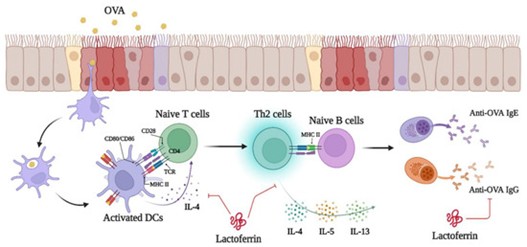
OVA-Induced Asthma Model Mechanism
Model Applications:
- Investigation of asthma pathogenesis
- Anti-allergic drug screening and efficacy evaluation
- Airway inflammation and remodeling research
- Development of immunotherapeutic strategies
How Is It Applied in EliCell Assays?
The EliCell (Enzyme-Linked Immunospot for Cells) assay is a technique for detecting cytokine release from cells such as eosinophils. Ovalbumin serves as a cell incubation medium in this assay:
Experimental Principle:
Eosinophils are co-incubated with OVA, which acts as a stimulant to induce cytokine release (such as IL-4, IL-5, GM-CSF, etc.) from eosinophils. Through a double-antibody sandwich method for capture and chromogenic detection, cytokine secretion can be assessed at the single-cell level.
Key Operational Points:
- Use OVA as a specific stimulatory antigen
- Set up different concentration gradients (e.g., 10-100 μg/mL) to optimize stimulation conditions
- Combine with specific antibodies to detect eosinophil activation status
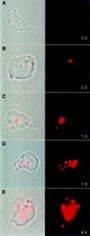
EliCell Assay Schematic
What Is Its Special Application in Protein Electrophoresis?
Ovalbumin serves as a practical molecular weight indicator protein in SDS-PAGE (Sodium Dodecyl Sulfate-Polyacrylamide Gel Electrophoresis):
Standard Molecular Weight Marker:
- Apparent molecular weight approximately 45 kDa (actual 44.3 kDa)
- Positioned between β-actin (42 kDa) and bovine serum albumin (66 kDa)
- Can be used to verify electrophoretic separation efficiency and transfer efficiency
Electrophoretic Characteristics:
- Isoelectric point pH 4.7; carries a net negative charge in conventional electrophoresis buffer and migrates toward the anode
- Glycosylation and phosphorylation modifications may cause slight smearing or multiple band phenomena during electrophoresis (depending on purity)
- High purity grade (≥90%) presents as a single sharp band
Critical Considerations for Use
Solubilization and Storage:
- Appearance is off-white or pale yellow lyophilized powder, amorphous lumps, or scaly crystals
- Soluble in water and dilute buffers; it is recommended to first dissolve in a small amount of water, then dilute to the desired concentration with buffer
- Powder should be stored dry and protected from moisture; solutions should be aliquoted and stored at -20°C, avoiding repeated freeze-thaw cycles
Immunogen Preparation Considerations:
- Control pH within the appropriate range during coupling reactions (typically pH 7-9)
- Optimize the molar ratio with hapten; typically carrier protein is in excess to ensure complete coupling
- Thorough dialysis is required after coupling to remove unbound hapten and cross-linker
Asthma Model Considerations:
- OVA must be thoroughly mixed with adjuvant (such as aluminum hydroxide) to enhance immunogenicity
- Sensitization and challenge doses should be adjusted according to animal strain and body weight
- Note individual variation; some animals may not produce robust responses
Safety:
Wear a lab coat and disposable gloves during operation, avoiding powder inhalation or solution contact with skin. Although OVA itself has low toxicity, it may cause allergic reactions (particularly in individuals with egg allergies).
By selecting the appropriate purity grade and following standardized operational procedures, chicken egg white albumin can provide reliable and economical experimental materials for vaccine development, allergic disease research, and protein analysis.
Absin Chicken Egg White Albumin Recommendations
Contact Absin
Absin provides antibodies, proteins, ELISA kits, cell culture, detection kits, and other research reagents. If you have any product needs, please contact us.
| Absin Bioscience Inc. worldwide@absin.cn |
 Follow us on Facebook: Absin Bio Follow us on Facebook: Absin Bio |