

- Cart 0
- English
Why Do Your Western Blot Results Keep Failing to Reproduce Those Perfect Bands?
March 05, 2026
Clicks:75


In molecular biology laboratories, Western Blot stands as one of the most fundamental yet "mystical" techniques. Identical protein samples and antibodies can yield dramatically different results across experimental batches: sometimes bands appear crisp and sharp, sometimes the background resembles a night sky, and occasionally target bands vanish inexplicably. Faced with such uncertainty, many researchers habitually seek causes in isolated parameters like antibody concentration or exposure time, overlooking that Western Blot represents a systematic engineering process where each step is interdependent. It is precisely to address the systemic risks arising from such "fragmented" operations.
What Exactly is a WB Auxiliary Kit?
A WB Auxiliary Kit is an integrated Western Blot experimental solution that pre-formulates and optimally combines core reagents required throughout the protein immunoblotting workflow into a standardized reagent set. This "one-stop" design philosophy eliminates batch-to-batch variations and operational errors when researchers prepare various working solutions independently, ensuring that every step—from sample preparation to final development—proceeds under optimal conditions.
From a technical perspective, a complete WB Auxiliary Kit comprises the following key modules:
- Electrophoresis System: 10X Running Buffer (Tris-glycine-SDS buffer system) and 2X Loading Buffer for electrophoretic separation and sample denaturation, respectively
- Transfer System: 10X Transfer Buffer (Towbin buffer formulation containing methanol) and PVDF membrane (0.45 μm pore size) for efficient protein transfer from gel to solid-phase support
- Immunodetection System: 10X TBST Wash Buffer, BSA and non-fat milk (blocking agents), prestained protein Marker, HRP-conjugated secondary antibodies (anti-rabbit/anti-mouse/anti-goat), and Chromogenic Solutions A and B (ECL chemiluminescent substrate)
This modular design ensures compatibility between components while providing flexible usage—researchers can dilute working solutions according to experimental scale, avoiding waste from large-package reagents and performance degradation from long-term storage.
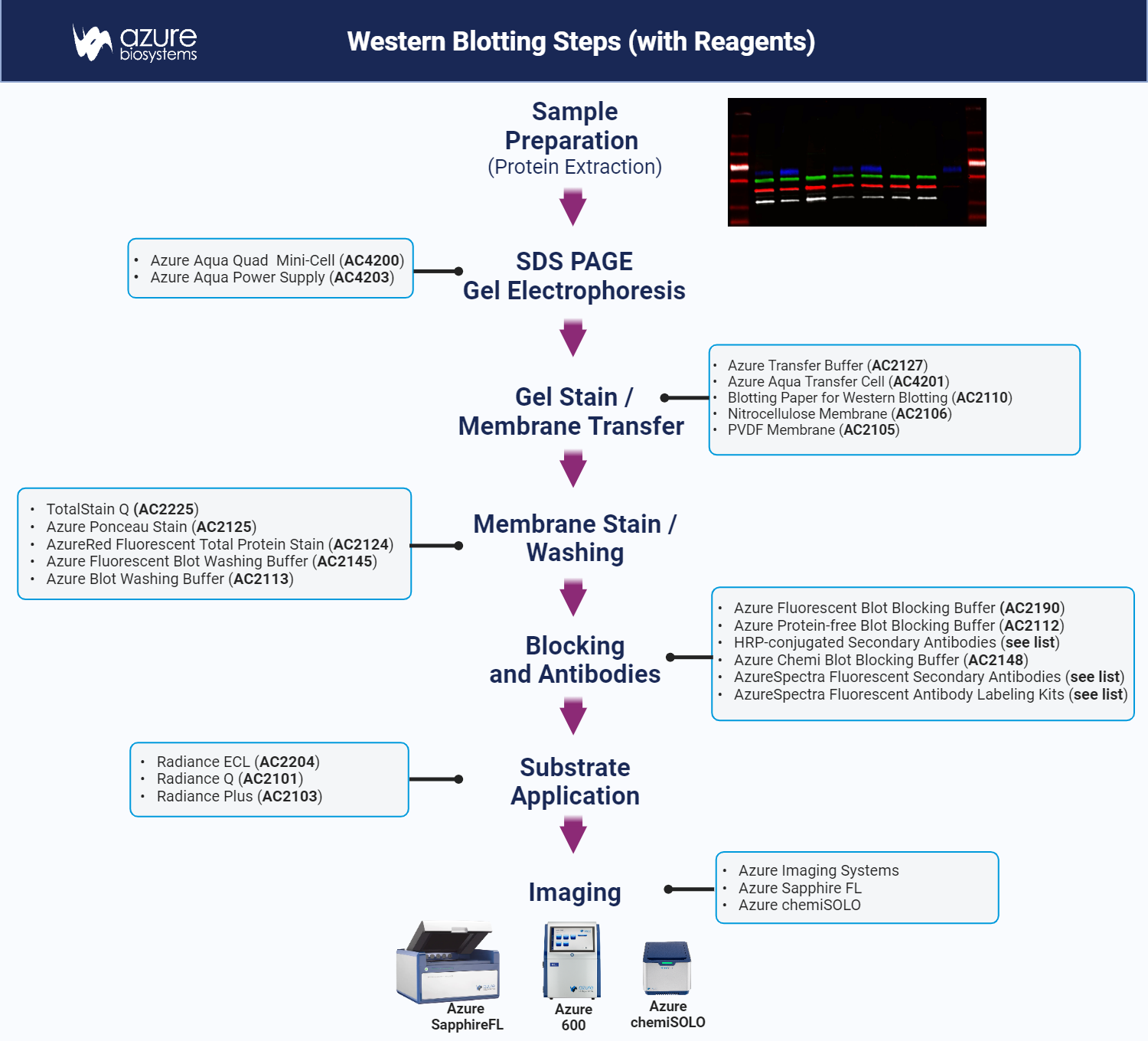
Figure 1: Complete experimental workflow and key reagent requirements for Western Blotting.
From sample preparation, SDS-PAGE gel electrophoresis, transfer, blocking, primary and secondary antibody incubation, washing to final imaging, each step requires specific buffers and reagents. The WB Auxiliary Kit ensures standardization and reproducibility throughout the entire workflow by providing pre-optimized running buffer, transfer buffer, blocking agents, wash buffer, chromogenic solutions, and other comprehensive reagents, significantly reducing experimental failure risks caused by improper reagent preparation.
Why Are Standardized Reagents Critical for Western Blot?
The complexity of Western Blot lies in its "long-chain" characteristics, where minute deviations in any step become amplified in subsequent stages.
Intrinsic Interconnections of Buffer Systems
Western Blot involves multiple buffers that maintain precise chemical equilibria:
- Running Buffer pH: Affects protein charge state and migration rate
- Transfer Buffer Ionic Strength: Determines transfer electric field efficiency and protein binding capacity
- Wash Buffer Osmolarity: Influences dissociation degree of non-specific binding
- Blocking Buffer Composition: Determines blocking efficacy of non-specific sites on the membrane
When preparing buffers independently, Tris buffer pH is susceptible to temperature fluctuations, SDS solubility is affected by water hardness, and methanol concentration influences transfer efficiency. These variables accumulate, making inter-experimental differences difficult to trace.
Temporal Dimension of Reagent Stability
Many key components are sensitive to storage conditions:
- HRP-conjugated Secondary Antibodies: Repeated freeze-thaw cycles or prolonged 4°C storage lead to decreased enzymatic activity and weakened signal
- ECL Chromogenic Solution: Solutions A and B remain relatively stable before mixing but rapidly lose efficacy after mixing, requiring preparation immediately before use
- Prestained Markers: Dye molecules may migrate over time, causing band position drift
WB Auxiliary Kits ensure reagents are consumed within their validity period through rational packaging specifications (e.g., 50 μL secondary antibody, 6 mL chromogenic solution), avoiding performance degradation of large-package reagents.
Challenges in Operational Standardization
Even with established protocols, significant differences exist in operational habits among researchers:
- Is running buffer prepared fresh or recycled?
- Is transfer performed under constant voltage or constant current?
- Is blocking performed with BSA or non-fat milk? At 5% or 3% concentration?
- Is washing performed manually or mechanically? For how many minutes each time?
WB Auxiliary Kits standardize these variables by providing optimized formulations and detailed protocols, substantially reducing inter-operator differences.
Which Experimental Scenarios Best Demonstrate the Value of WB Auxiliary Kits?
Western Blot Introduction for Novice Laboratories
For researchers beginning their Western Blot journey, the greatest obstacle is not understanding the principles but feeling overwhelmed when facing the vast array of reagent choices. WB Auxiliary Kits provide an "out-of-the-box" solution:
- No Formula Optimization Required: Running buffer, transfer buffer, and wash buffer are provided as 10x concentrates—simply dilute according to instructions
- Avoid Common Errors: Pre-formulated loading buffer contains appropriate amounts of bromophenol blue and reducing agents, preventing weighing errors during independent preparation
- Rapid Confidence Building: Standardized reagents and protocols help novices quickly achieve reproducible results
High-Sensitivity Low-Abundance Protein Detection
When detecting low-abundance proteins (such as phosphorylated proteins, transcription factors, cytokines), any background noise may mask weak positive signals. WB Auxiliary Kits enhance signal-to-noise ratio through optimization of the following steps:
- High-Quality Blocking Agents: Provided BSA and non-fat milk are screened for low endogenous biotin and immunoglobulin content, reducing cross-reactivity
- Efficient Wash Buffer: Tween-20 concentration in TBST is optimized to effectively remove non-specific binding without disrupting antigen-antibody complexes
- Sensitive Detection System: ECL substrate is formulation-optimized for high signal intensity, long duration, and low background
Phosphorylated Protein and Post-Translational Modification Research
Such research demands exceptionally high reagent purity:
- Running Buffer Buffering Capacity: Stable pH environment maintains uniform charge on SDS-protein complexes
- Transfer Buffer Methanol Concentration: Appropriate methanol concentration promotes protein binding to PVDF membrane while preventing small phosphorylated peptides from penetrating through
- Blocking Agent Selection: BSA is more suitable than non-fat milk for phosphorylated protein detection (milk contains phosphorylated casein that may interfere)
WB Auxiliary Kits provide multiple blocking agent options (BSA and non-fat milk), allowing researchers to flexibly select based on target protein characteristics.
Quantitative Western Blot (Normalization Analysis)
For experiments requiring accurate quantification (such as protein expression changes before and after drug treatment), reagent standardization forms the foundation of data reliability:
- Accuracy of Prestained Markers: Standard bands of known molecular weight for calibration and molecular weight estimation
- Consistency of Transfer Efficiency: Optimized transfer buffer ensures consistent transfer efficiency across different molecular weight proteins
- Parallel Detection of Housekeeping and Target Proteins: Standardized reagents ensure stable signals of housekeeping proteins (such as GAPDH, β-actin) across different experimental batches
Conclusion
WB Auxiliary Kits represent the evolution of life science research tools from "dispersed procurement" toward "system integration." In Western Blot, a classic technique with numerous steps and complex variables, they significantly reduce experimental failure risks and improve data reproducibility by providing pre-optimized, pre-validated reagent combinations. From beginners to senior researchers, from basic research to clinical translation, standardized Western Blot solutions remain the cornerstone for obtaining reliable protein data. Mastering the proper use of this tool means acquiring a stable "technical chassis" on the path of protein analysis.
Contact Absin
Absin provides antibodies, proteins, ELISA kits, cell culture, detection kits, and other research reagents. If you have any product needs, please contact us.
| Absin Bioscience Inc. worldwide@absin.cn |
 Follow us on Facebook: Absin Bio Follow us on Facebook: Absin Bio |