

- Cart 0
- English
Absin mIHC Kit Powers Nature Communications Study Decoding S. aureus Aggregation Mechanisms in Joint Infections
February 25, 2026
Clicks:73


Joint infections represent a formidable challenge in orthopedic clinical practice, often resulting in treatment failure due to aggregative biofilm-like structures formed by Staphylococcus aureus (S. aureus), ultimately leading to irreversible joint damage. Recently, a landmark study published in Nature Communications has, for the first time, elucidated the core mechanism by which fatty acid metabolism governs S. aureus aggregation in joint infections, identifying novel therapeutic targets. Absin, as a key supplier of experimental reagents, provided high-quality products that offered robust support for the breakthrough advances achieved in this research.
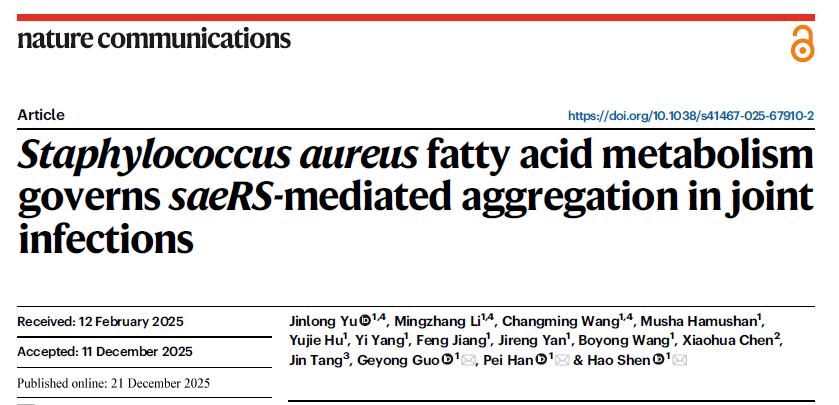
Title: Staphylococcus aureus fatty acid metabolism governs saeRS-mediated aggregation in joint infections
Journal: Nature Communications (IF=15.7)
DOI: https://doi.org/10.1038/s41467-025-67910-2
Absin Products Used: Four-Color Multi-Label Immunofluorescence Kit (Anti-Rabbit Secondary Antibody) (abs50012)

I. Addressing Clinical Challenges: Decoding the "Pathogenic Cipher" of Bacterial Aggregation
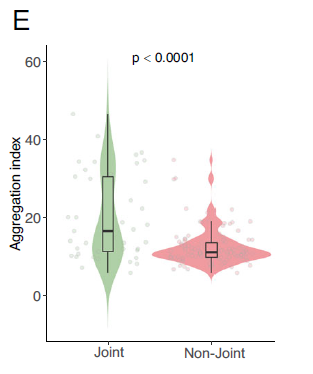
Aggregative structures formed by S. aureus in synovial fluid constitute the primary etiological factor underlying persistent infection—these aggregates evade phagocytosis by immune cells and resist antibiotic killing, yet their regulatory mechanisms have long remained elusive. The research team adopted a core strategy of "clinical problem identification - mechanistic exploration - targeted validation," constructing a hierarchically progressive research framework:
1. Clinical Sample Validation: Analysis of 152 strains from patients with musculoskeletal infections confirmed high aggregative capacity as an independent risk factor for joint infection (Fig. 1E);2. Mechanistic Investigation: Through directed evolution screening of non-aggregative mutants, the fak-saeRS signaling axis was identified as the core regulatory pathway;
3. Molecular Elucidation: Demonstration that the Fak system regulates SaeRS-mediated FnbA/B expression through clearance of exogenous fatty acids and maintenance of functional membrane microdomain (FMM) integrity, ultimately driving aggregation via FnbA/B-fibrinogen binding (Fig. 3K);4. Targeted Validation: Screening identified undecanoic acid (UDA) as a Fak pathway inhibitor, which significantly enhanced therapeutic efficacy when combined with antibiotics.
II. Core Research Findings: Three Breakthroughs Illuminating Novel Therapeutic Directions
1. Novel Discovery in Aggregation Mechanisms: Definitive identification of the fak-saeRS-FnbA/B-fibrinogen axis as the critical pathway for S. aureus aggregation in joints, challenging the conventional paradigm that "aggregation equals biofilm" by demonstrating fundamental differences in formation kinetics, structural composition, and regulatory mechanisms;2. Novel Elucidation of Regulatory Patterns: First revelation of the dual-mechanism activation of SaeRS by the Fak system: (1) clearance of exogenous fatty acids to relieve their inhibition of SaeRS, and (2) maintenance of FMM integrity to facilitate SaeS localization (Fig. 5J);
3. Novel Breakthrough in Therapeutic Strategy: Discovery that UDA specifically binds FakB1/2 (SPR validation confirmed affinity comparable to native ligands), significantly inhibiting bacterial aggregation and reducing resistance to anti-FASII antibiotics, achieving vancomycin-comparable therapeutic efficacy when combined with AFN1252 in murine models (Fig. 7J-K).
III. Absin Product Empowerment: The "Precision Tool" for Critical Experiments
In this mechanistically complex and experimentally demanding study, Absin's horseradish peroxidase (HRP)-conjugated secondary antibody (Catalog No.: abs50012) served as the core support for immunofluorescence experiments, providing reliable assurance for validation of key results:
1. Application Scenario: In situ detection of S. aureus aggregation in murine joint tissue (Fig. 7L);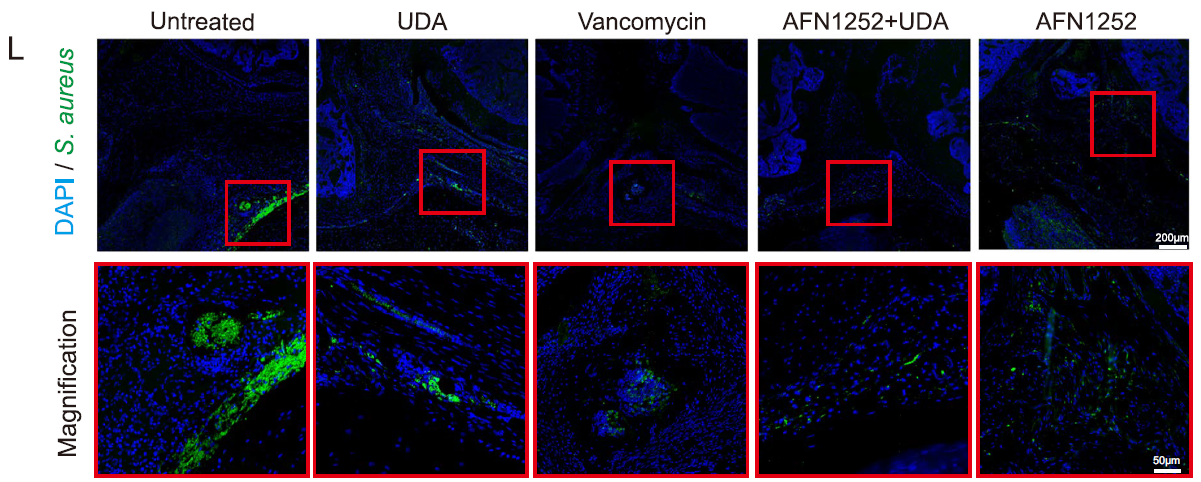 2. Core Function: Specific binding with anti-aureus primary antibody, enabling precise tracking of bacterial distribution in joint tissue through fluorescent signaling, clearly demonstrating the reduction of bacterial aggregates following UDA treatment;
3. Product Advantages: High signal intensity with low non-specific binding, ensuring clear imaging of bacterial aggregation signals in tissue sections, providing direct morphological evidence for the conclusion that "UDA effectively eliminates intra-articular bacterial aggregates."
The stable performance of this product enabled the research team to precisely capture dynamic changes in bacterial aggregation before and after treatment, serving as a critical experimental tool bridging molecular mechanisms and in vivo therapeutic efficacy, with its reliability recognized by the research team.
IV. Clinical Translation Prospects: From Mechanistic Research to Therapeutic Innovation
This study not only fills a critical knowledge gap regarding the regulatory mechanisms of S. aureus aggregation in joint infections but also provides a novel therapeutic direction—the UDA-antibiotic combination regimen targeting the fak-saeRS axis offers a potential solution to the persistent challenges of high resistance and poor efficacy associated with conventional treatments. As a reliable partner in life science research, Absin will continue to empower infection mechanism studies and novel therapeutic strategy development with high-quality reagents, providing instrumental support for overcoming clinical challenges and facilitating the translational leap from basic research to clinical application.
This content is based on the original publication in Nature Communications (DOI: 10.1038/s41467-025-67910-2); all images, data, and intellectual property rights referenced herein belong to the original journal and research team. Should any infringement occur, please contact us promptly for removal, and we will cooperate fully to resolve such matters.
|
Item NO. |
Product Name |
Size |
|
Absin 4-Color IHC Kit (Anti-Rabbit and Mouse Secondary Antibody) |
20T/100T |
|
|
Absin 4-Color IHC Kit(Anti-Rabbit Secondary Antibody) |
20T/100T |
|
|
Absin 5-Color IHC Kit (Anti-Rabbit and Mouse Secondary Antibody) |
20T/100T |
|
|
Absin 5-Color IHC Kit (Anti-Rabbit Secondary Antibody) |
20T/100T |
|
|
Absin 6-Color IHC Kit (Anti-Rabbit and Mouse Secondary Antibody) |
20T/100T |
|
|
Absin 6-Color IHC Kit (Anti-Rabbit Secondary Antibody) |
20T/100T |
|
|
Absin 7-Color IHC Kit (Anti-Rabbit and Mouse Secondary Antibody) |
20T/100T |
|
|
Absin 7-Color IHC Kit(Anti-Rabbit Secondary Antibody) |
20T/100T |
|
|
Antibody eluent (for mIHC) |
30ml |
Contact Absin
Absin provides antibodies, proteins, ELISA kits, cell culture, detection kits, and other research reagents. If you have any product needs, please contact us.
| Absin Bioscience Inc. worldwide@absin.cn |
 Follow us on Facebook: Absin Bio Follow us on Facebook: Absin Bio |