

- Cart 0
- English
Principles and Applications of Mitochondrial Permeability Transition Pore Detection Technology
February 09, 2026
Clicks:771


Mitochondria serve not only as cellular powerhouses but also as critical hubs regulating cell fate. Among these, the Mitochondrial Permeability Transition Pore (MPTP), a non-selective high-conductance channel spanning the inner and outer mitochondrial membranes, plays a central role in apoptosis, necrosis, and various pathophysiological processes. Accurate detection of MPTP opening status is essential for elucidating cell death mechanisms, screening protective agents, and studying ischemia-reperfusion injury.
What is the Mitochondrial Permeability Transition Pore?
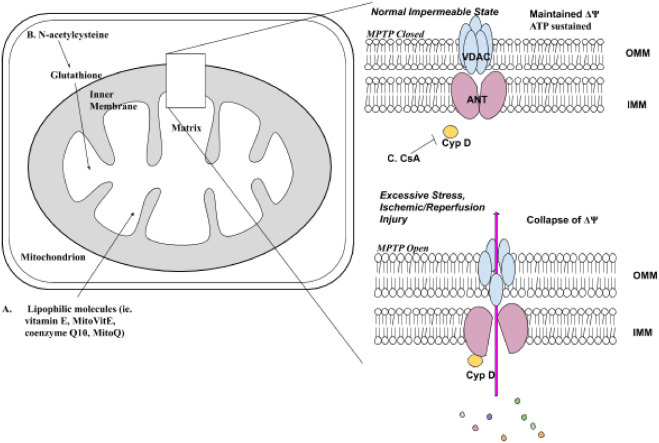
MPTP, also known as the mitochondrial megachannel, is a dynamic pore structure assembled from multiple protein complexes located at the inner and outer mitochondrial membranes. Under physiological conditions, MPTP dynamically transitions between "open" and "closed" states. This reversible switching constitutes a normal physiological function of mitochondria, participating in calcium homeostasis regulation and reactive oxygen species signaling.
However, when cells encounter hypoxia, oxidative stress, calcium overload, or toxin stimulation, MPTP undergoes irreversible sustained opening, leading to dramatically increased inner mitochondrial membrane permeability. This "permeability transition" triggers mitochondrial membrane potential (ΔΨm) collapse, mitochondrial swelling, and release of pro-apoptotic factors such as cytochrome C, ultimately activating the caspase cascade and driving apoptotic or necrotic cell death. Thus, MPTP opening is regarded as a critical checkpoint for mitochondrial dysfunction and cell death.
What is the Chemical Design Principle of the Detection Method?
The core of this detection method lies in utilizing the fluorescent properties of Calcein AM (Calcein acetoxymethyl ester) and the quenching characteristics of CoCl₂ (cobalt chloride) to establish a visual reporting system for mitochondrial integrity:
Calcein Retention in Mitochondria: Calcein AM is a lipophilic, non-fluorescent dye that freely penetrates live cell membranes into the cytoplasm. Intracellular esterases hydrolyze it into Calcein (a polar molecule), which cannot permeate intact mitochondrial membranes and becomes trapped inside, emitting intense green fluorescence (excitation/emission wavelengths: 494/517 nm). At this stage, the entire cell (cytoplasm + mitochondria) displays green fluorescence.
CoCl₂ Quenching Strategy: Upon addition of CoCl₂, Co²⁺ ions act as fluorescence quenchers, capable of quenching Calcein fluorescence in the cytoplasm and nucleus. The critical point is that only when the mitochondrial membrane remains intact and MPTP is in the closed state can Co²⁺ be prevented from entering the mitochondrial matrix, thereby preserving the Calcein fluorescent signal within mitochondria. At this point, green fluorescence detected by microscopy or flow cytometry originates exclusively from mitochondria.
Detection Logic for MPTP Opening: When MPTP opens, mitochondrial membrane permeability increases, causing Calcein to release from mitochondria into the cytoplasm while Co²⁺ enters mitochondria, resulting in disappearance or significant attenuation of mitochondrial fluorescence. By comparing changes in mitochondrial fluorescence intensity between sample and control groups, MPTP opening extent can be quantitatively assessed.
Why is it More Direct Than Mitochondrial Membrane Potential Analysis?
Traditional mitochondrial membrane potential detection (using JC-1 or TMRM), while capable of reflecting mitochondrial functional status, lacks specificity because membrane potential depolarization may result from MPTP opening, respiratory chain inhibition, ATP depletion, or other causes.
In contrast, MPTP detection kits directly monitor permeability changes of the pore itself: Calcein leakage from mitochondria and Co²⁺ influx are direct consequences of MPTP opening, unaffected by other factors that influence membrane potential. Furthermore, this assay can be performed in live cells, avoiding fixation or permeabilization processes that disrupt mitochondrial structure, enabling capture of the dynamic process of MPTP opening.
Which Experimental Scenarios Can Apply This Technology?
Cell Apoptosis Mechanism Research: In cell death models induced by chemotherapeutic drugs, radiation, or oxidative stress, temporal detection of MPTP opening status can determine the precise timing of mitochondrial permeability transition in apoptotic pathways, distinguishing between mitochondrial (intrinsic) and death receptor (extrinsic) apoptosis.
Ischemia/Reperfusion Injury Models: In myocardial, cerebral, or renal ischemia-reperfusion injury, MPTP opening represents a critical pathological component. This kit can evaluate the regulatory effects of ischemic preconditioning, postconditioning, or pharmacological interventions on MPTP, screening for small molecule compounds with organ-protective potential.
Neurodegenerative Diseases: In Alzheimer's disease, Parkinson's disease, and amyotrophic lateral sclerosis (ALS), mitochondrial dysfunction and aberrant MPTP opening are closely associated with neuronal death. Using primary neurons or neural stem cell models, researchers can investigate the effects of disease-related proteins (such as α-synuclein, amyloid-β) on MPTP.
Drug Screening and Toxicity Assessment: Screening for MPTP inhibitors (such as cyclosporin A, sanglifehrin A) or activators (such as ionophores). In drug safety evaluation, detecting whether candidate drugs induce MPTP opening enables early warning of mitochondrial toxicity risks.
Calcium Homeostasis Research: By combined use of Ionomycin (calcium ionophore, as positive control) and calcium chelators, cytoplasmic calcium levels can be precisely regulated to study dose-response relationships between calcium signaling and MPTP opening.
How to Set Up Controls and Optimize Conditions in Experiments?
Positive Control Setup: Ionomycin serves as the positive control, importing exogenous Ca²⁺ overload to directly activate MPTP and cause mitochondrial fluorescence quenching. This validates the experimental system's responsiveness to MPTP opening.
Concentration Optimization: Concentrations of Calcein AM and CoCl₂ require pilot optimization based on cell type. Recommended final concentration for Calcein AM is 1× (adjustable 0.5×-5×); for CoCl₂, 1× (adjustable 0.1×-1×). Insufficient concentration leads to incomplete quenching; excessive concentration may cause cytotoxicity or background fluorescence.
Detection Method Selection:
- Flow Cytometry: Suitable for high-throughput screening and quantitative analysis, capable of detecting average fluorescence intensity changes in large cell populations, ideal for drug dose-response curve generation.
- Fluorescence Microscopy: Suitable for single-cell level observation, enabling direct visualization of the proportion of cells with quenched mitochondrial fluorescence and spatial distribution of MPTP opening.
Cell Processing Considerations:
- For adherent cells, use EDTA-free trypsin for detachment, as EDTA chelates Ca²⁺ and interferes with calcium-dependent MPTP regulatory mechanisms.
- Incubate protected from light throughout the experiment (30-45 minutes) to prevent Calcein photobleaching.
- For suspension cells, perform centrifugation and resuspension gently (300 g, 5 minutes) to avoid mechanical damage causing false positives.
Key Indicators for Result Interpretation
Successful detection should display:
- Negative Control (Calcein AM only): Entire cell displays bright green fluorescence (including cytoplasm and mitochondria).
- Experimental Group (Calcein AM + CoCl₂, MPTP closed): Cytoplasmic fluorescence is quenched; only mitochondria display punctate or reticular green fluorescence.
- Positive Control (Calcein AM + CoCl₂ + Ionomycin, MPTP open): Mitochondrial fluorescence is significantly attenuated or completely disappeared, with only minimal residual background.
As cell biology and pathological mechanism research advance, mitochondrial permeability transition pore detection technology provides precise tools for elucidating the mitochondrial component of cell death. Through standardized kit protocols, researchers can monitor this critical cell fate switch in real time at the live cell level, providing reliable data support for basic research and drug development.
Absin Mitochondrial Permeability Transition Pore Detection Kit Recommendation
| Cat. No. | Product Name | Specification |
|---|---|---|
| abs50064 | Mitochondrial Permeability Transition Pore (MPTP) Assay Kit | 50T/100T |
Contact Absin
Absin provides antibodies, proteins, ELISA kits, cell culture, detection kits, and other research reagents. If you have any product needs, please contact us.
| Absin Bioscience Inc. worldwide@absin.cn |
 Follow us on Facebook: Absin Bio Follow us on Facebook: Absin Bio |