

- Cart 0
- English
Scissor hands: CRISPR/Cas9
July 02, 2025
Clicks:364


The CRISPR/Cas system is an important component of bacterial acquired immunity and consists of Cas nuclease and two separate RNA components, i.e., programmed crRNA (CRISPR RNA) and immobilized TracRNA (trans-activated crRNA).
In 2012, Jennifer Doudna and Emmanuelle Charpentier discovered that Cas9 could be used as a DNA cutting tool, and CRISPR/Cas9 technology really began to gain traction.
CRISPR/Cas9 regulatory mechanism
1. Transcription of CRISPR:CRISPR is transcribed into a long RNA (pre-crRNA) containing repetitive and spacer sequences.
2. Transcription of tracrRNA: tracrRNA is transcribed into tracrRNA.
3. Maturation of CRISPR/Cas9 complex: tracrRNA binds to pre-crRNA, and Cas9 is also involved in crRNA maturation after cleavage by exogenous RNase III. The tracrRNA is fused to the crRNA, i.e., sgRNA, and binds to Cas9.
4. Target identificationThe CRISPR/Cas9 complex scans the invading DNA for sequences that are complementary to the crRNA spacer sequence. During recognition, the spacer sequence of the crRNA is paired with a specific sequence (protospaced short palindromic repeat adjacent motif, PAM) of the target DNA (i.e., gRNA).
5. DNA cleavage: Once a matching sequence is found, the nuclease Cas9 cleaves the DNA duplex near the PAM site. The nuclease Cas9 has two nuclease domains, the HNH domain cleaves one strand of DNA and the RuvC domain cleaves the other strand.
6. DNA repair: Bacteria or cells repair DNA breaks through non-homologous end joining (NHEJ) or homology-directed repair (HDR) mechanisms. NHEJ usually results in insertions or deletions (indels), while HDR can repair DNA precisely if a repair template is provided.
Note: Regulation of the CRISPR/Cas9 system: In its native state, activation of the CRISPR/Cas9 system is passive, and once the crRNA binds to Cas9, the system is in a state to be activated. The CRISPR/Cas9 system can be modulated by designing specific gRNAs to target specific gene sequences.

Fig.1 CRISPR/Cas9 regulation[1]
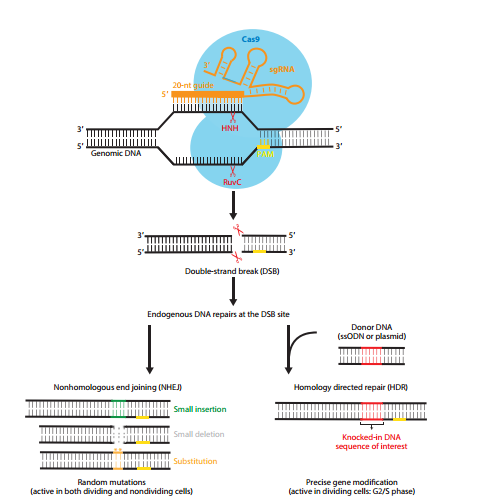
Fig.2 DNA repair after CRISPR/Cas9 splicing[1]
Gene regulation of CRISPR/Cas9
CRISPR/Cas-9-mediated genome editing has emerged as a potential innovative technology in therapeutic development and biomedical research. CRISPR/Cas9 technology holds great promise for disease treatment due to its flexibility, simplicity, high efficiency, and multiplexing of precise genome editing.
1、GM-CSF:CRISPR/Cas9-mediated knockout of GM-CSF and GM-CSF compared to wild-type CAR T cellsk/oCAR T cells produce less GM-CSF without attenuating antitumor activity in vivo[2].
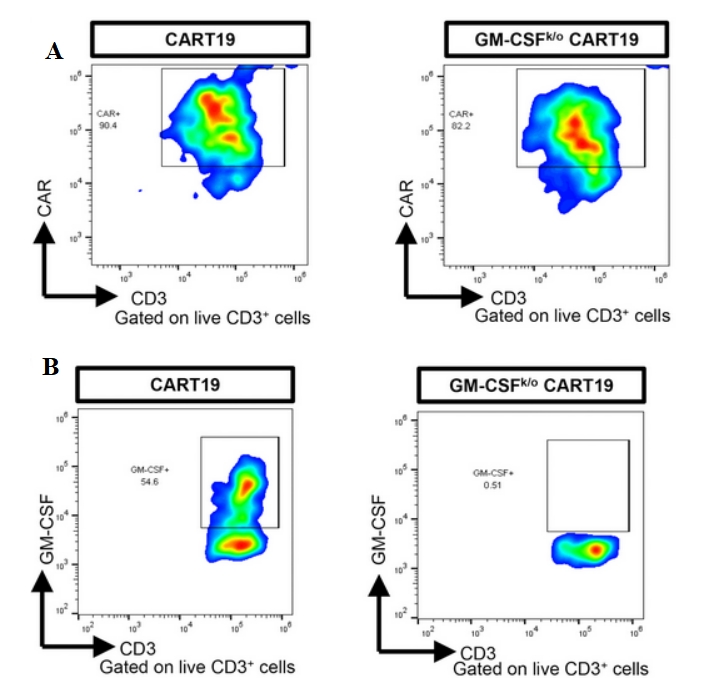
Figure 3A: Wild-type CART19 and GM-CSFk/o Successful CAR-T cell production with similar CAR expression on CART19.
B: GM-CSF compared to wild-type CART19 when stimulated with the CD19-positive ALL cell line NALM6 by intracellular stainingk/o CART19 cells show reduced GM-CSF
2. Frizzled 7: 48 h before intracerebral hemorrhage (ICH) induction, Frizzled 7 is activated or knocked down by intraventricular injection of clustered regularly spaced palindromic repeats (CRISPR). The results showed that activation of Frizzled-7 significantly increased the expression of Dvl, β-Catenin, WISP1, VE-Cadherin, Claudin-5 and ZO-1, and decreased the expression of phospho-β-Catenin. WISP1 gene knockout abolishes the effect of Frizzled 7 activation on VE-Cadherin, Claudin-5, and ZO-1 expression at 24 h post-ICH. Therefore, Frizzled 7 may be a potential therapeutic target for BBB protection and improved prognosis in ICH patients[3].
Related Products:
|
Catalog number |
name |
specification |
|
Human GM CSF Receptor alpha Gene Knockout Kit(CRISPR) |
1kit | |
|
Human Frizzled 7 Gene Knockout Kit(CRISPR) |
1kit | |
|
Human Claudin 1 Gene Knockout Kit(CRISPR) |
1kit | |
|
Human CART Gene Knockout Kit(CRISPR) |
1kit | |
|
Human CCN4 Gene Knockout Kit(CRISPR) |
1kit | |
|
Human TJP1 Gene Knockout Kit(CRISPR) |
1kit | |
|
For more products, please scan the code or log in to www.absin.net |
||
References:
[1] Jiang F, Doudna JA. CRISPR-Cas9 Structures and Mechanisms. Annu Rev Biophys. 2017 May 22; 46:505-529. doi: 10.1146/annurev-biophys-062215-010822. Epub 2017 Mar 30. PMID: 28375731.
[2] Sterner RM, Cox MJ, Sakemura R, Kenderian SS. Using CRISPR/Cas9 to Knock Out GM-CSF in CAR-T Cells. J Vis Exp. 2019 Jul 22; (149). doi: 10.3791/59629. PMID: 31380838.
[3] He W, Lu Q, Sherchan P, Huang L, Hu X, Zhang JH, Dai H, Tang J. Activation of Frizzled-7 attenuates blood-brain barrier disruption through Dvl/β-catenin/WISP1 signaling pathway after intracerebral hemorrhage in mice. Fluids Barriers CNS. 2021 Sep 26; 18(1):44. doi: 10.1186/s12987-021-00278-9. PMID: 34565396.
Absin provides antibodies, proteins, ELISA kits, cell culture, detection kits, and other research reagents. If you have any product needs, please contact us.
|
Absin Bioscience Inc. Email: worldwide@absin.net |
 Follow us on Facebook: Absin Bio Follow us on Facebook: Absin Bio |