

- Cart 0
- English
Stem Cells with High Regenerative Potential Found in Deer Antlers
February 20, 2025
Clicks:1451


On February 24, 2023, a research team led by Professor Qiu Qiang and Professor Wang Wen from the School of Ecology and Environment at Northwestern Polytechnical University, Professor Huang Jinghui from Xijing Hospital of Air Force Medical University, Professor Li Chunyi from Changchun Sci-Tech University, and Professor Li Zhipeng from Jilin Agricultural University published a research paper titled "A population of stem cells with strong regenerative potential discovered in deer antlers" in SCIENCE. The study found that deer antler blastema progenitor cells are a potential source of regenerative cells conserved in higher vertebrates. The research suggests that this discovery could be applied to clinical bone repair. With the activation of key characteristic genes, it has the potential to be used in the regeneration of bones, long bones, or limbs in regenerative medicine.
The regeneration of limbs and organs has long been a coveted technology in medical science. Lower vertebrates exhibit remarkable scarless healing abilities, even capable of regrowing new limbs in adulthood. In contrast, mammals have largely lost the ability to regenerate limbs or organs. However, deer antlers provide a unique model for studying spontaneous regeneration in mammals, as the regeneration of antlers is similar to the development of long bones in mammals and has clinical relevance.
Deer antlers are bony structures that extend from the frontal bone above the skull of deer and are secondary sexual characteristics of male deer. Antlers are shed and regrown annually, undergoing a transformation from velvet to bone. In spring, antlers begin to sprout, and the newly grown antlers are not yet ossified, being short, round, and covered with fine velvet and rich blood vessels. After three months, the antlers reach their maximum size, begin to harden, and the outer velvet gradually dries and falls off. This period coincides with the deer's mating season, during which antlers serve as weapons for intraspecies competition and defense against predators. After the mating season ends, the antlers are shed to conserve energy, waiting to regrow the following spring.
This study indicates that there are only two known regenerative abilities in mammalian appendages (deer and mice), suggesting the existence of relatively conserved cellular and molecular mechanisms.

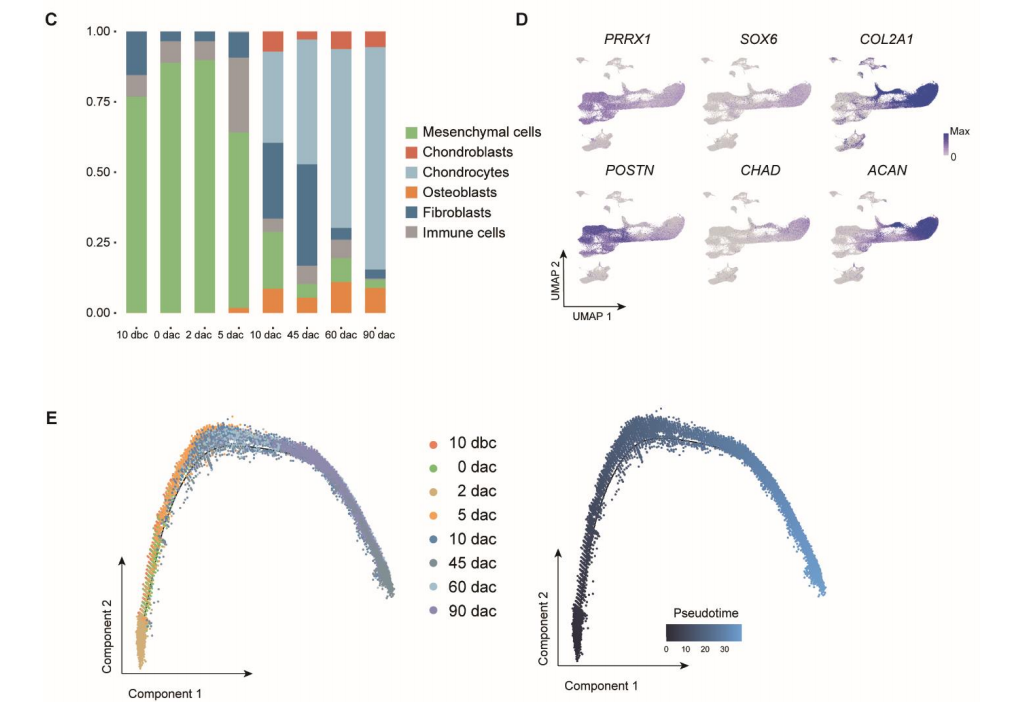
Figure 1: Cellular atlas of the antler regeneration process
In the paper, the research team also conducted immunohistochemical experiments and Immunoblotting experiments on paraffin sections of regenerating antler tissue, using the following specific primary antibodies: anti-PRRX1 (Absin, abs134576), anti-PTN (Absin, abs136720), and CX43 (Absin, abs145981) for protein-level validation.
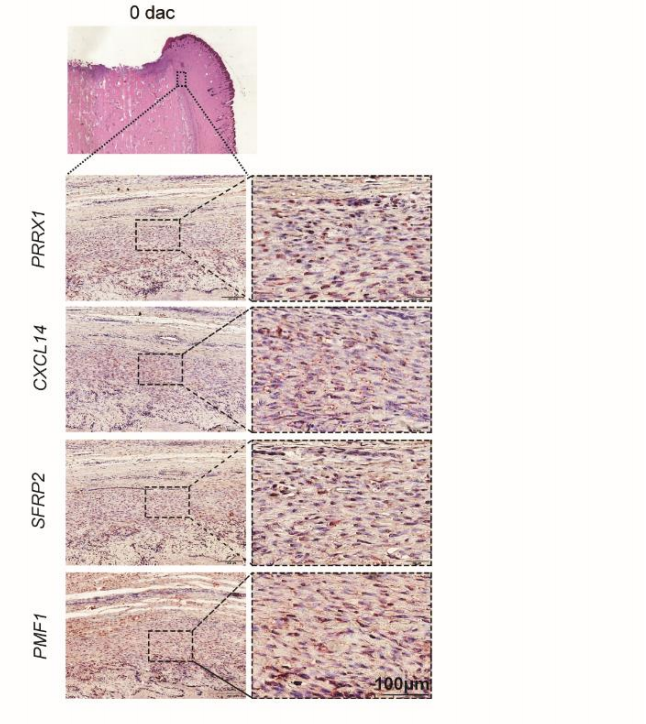
Figure 2: Immunohistochemical staining detecting marker genes in 0 dac regenerating tissue (PMCs: PRRX1, PMC1: SFRP2, PMC2: PMF1, PMC3: CXCL14)
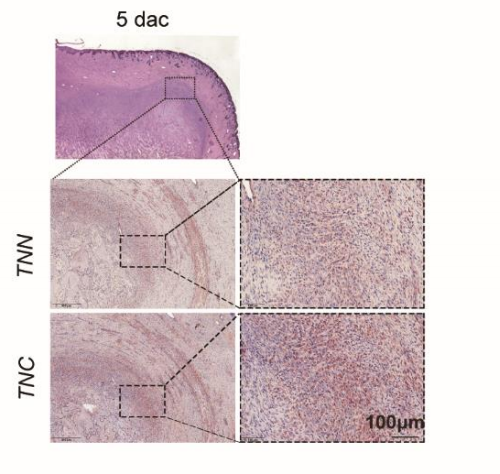
Figure 3: Immunohistochemical staining detecting TNN and TNC in 5 dac regenerating tissue.
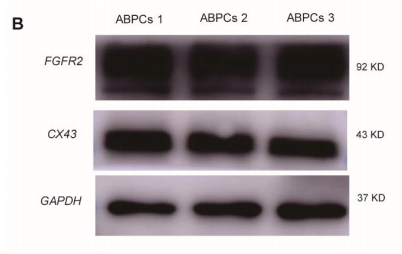
Figure 4: Immunoblotting confirming strong expression of FGFR2 and CX43 in ABPCs.
This study established a spatiotemporal cellular atlas of the entire antler regeneration cycle, systematically described the cellular and molecular mechanisms of antler regeneration and rapid growth, and identified a unique population of stem cells in mammals. This cell population demonstrated strong self-renewal and bone repair capabilities. This project will deepen the understanding of mammalian regeneration mechanisms and provide new insights for the development of regenerative medicine.
References
[1] Qin, T., Zhang, G., Zheng, Y., Li, S., Yuan, Y., Li, Q., & Qiu, Q. (2023). A population of stem cells with strong regenerative potential discovered in deer antlers. Science, 379(6634), 840-847.
Absin provides antibodies, proteins, ELISA kits, cell culture, detection kits, and other research reagents. If you have any product needs, please contact us
|
Absin Bioscience Inc. |
 Follow us on Facebook: Absin Bio Follow us on Facebook: Absin Bio |