

- Cart 0
- English
IF24.1! ICOS Controls the Activation of ILC3s in the Binding Process with B Cells
December 02, 2024
Clicks:369


Innate lymphoid cells (ILCs) are a type of innate immune cell and also belong to the lymphocyte family. However, due to the lack of adaptive antigen receptors, they are mostly resident in tissues and closely associated with tissue fibers. When the body is infected, ILCs can quickly respond and produce a series of cytokines. These proteins guide the developing immune response to adapt to the initial damage, while T cells only have time to make the minimum preparations at the early stages of infection. ILCs are very important for early anti-inflammatory and anti-infectious responses within tissues. In addition to this, innate immunity is also closely linked with acquired adaptive immunity. Scientists have been conducting various studies, hoping that ILCs can also serve as therapeutic targets like other immune cells, to be used for the treatment of human diseases, providing new targets and strategies for the treatment of human diseases.
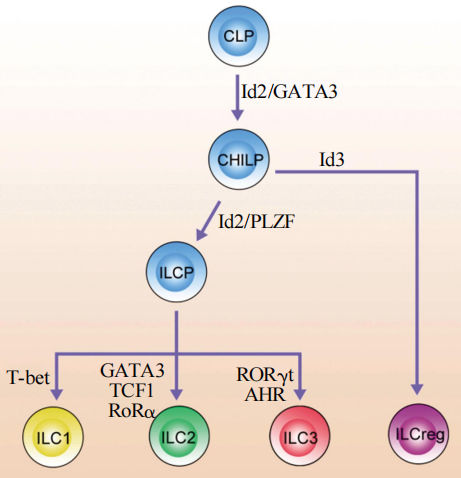
Figure 1: The developmental differentiation process of ILCs
On May 25, 2023, the team of Professors Chen Jingtong and Liu Yongjun from Jilin University published a research paper titled "Reciprocal costimulatory molecules control the activation of mucosal type 3 innate lymphoid cells during engagement with B cells" in the journal Cellular & Molecular Immunology. The study primarily focuses on T-cell co-stimulatory molecule (ICOS) and type 3 innate lymphoid cells (ILC3s), discovering that the expression of ICOS on human ILC3s is associated with the activation state of ILC3s. ICOS co-stimulation enhances the ability of ILC3s to survive, proliferate, and produce cytokines (IL-22, IL-17A, IFN-γ, TNF, and GM-CSF). Through the synergistic action of ICOS and CD40 signaling, B cells promote the function of ILC3s, and ILC3-induced T cell-independent secretion of B cell IgA and IgM mainly depends on CD40 signaling. Therefore, ICOS is essential for the non-redundant functions of ILC3s and their interactions with adjacent B cells.
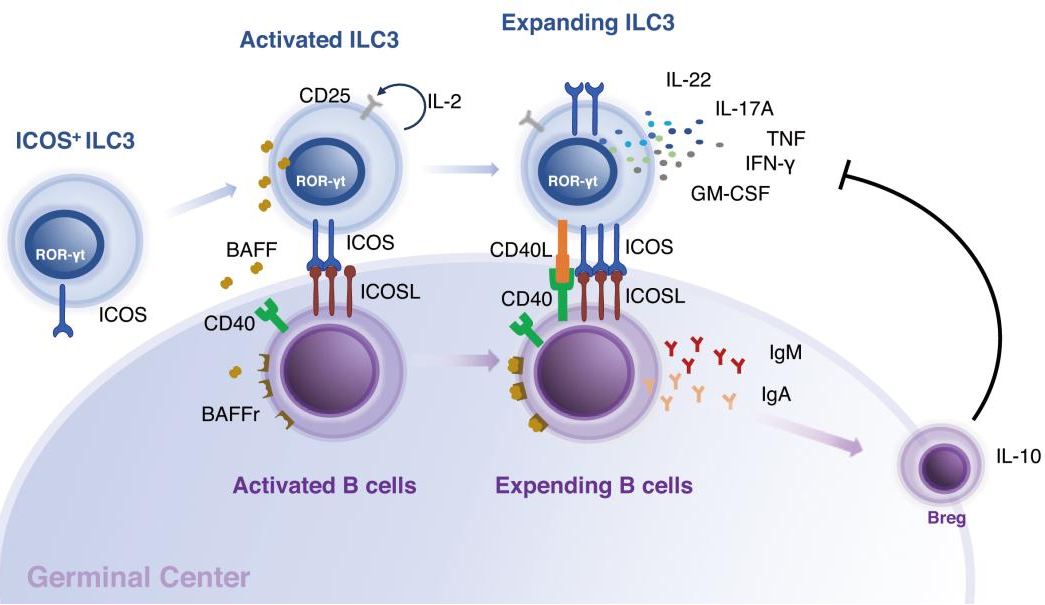
Figure 2: ICOS controls the activation of mucosal ILC3s during the engagement with B cells.
To verify the relationship between ILC3s and B cells in vivo, the research team used the Absin Four-Color Multiplex Fluorescent Immunohistochemistry Kit (abs50012) to perform multi-staining on the tonsil tissues from children who underwent routine tonsillectomy. The results showed that ILC3s (RoR-γt+CD3-) were in close contact with B cells (CD20-) in vivo, demonstrating their coexistence relationship.
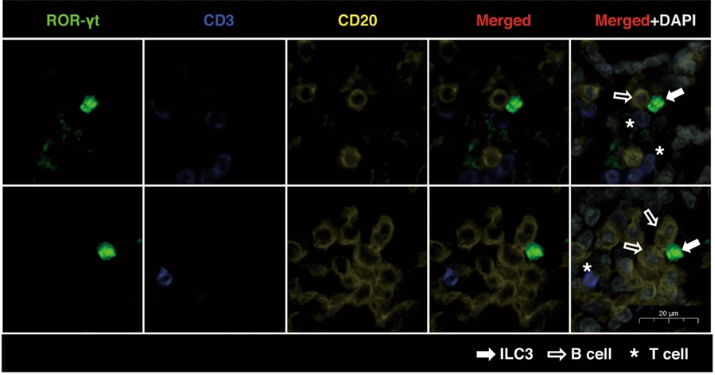
Figure 3: ILC3s (RoR-γt+CD3-) are in close contact with B cells (CD20-) in vivo.
The research results from Professors Chen Jingtong and Liu Yongjun's team show that the expression of ICOS on human ILC3s is a secondary activation signal that helps with the survival, proliferation, and cytokine production of ILC3s. Direct contact between autologous ILC3s and B cells induced by the interaction of ICOS and ICOSL promotes the activation-related state of ILC3s, which is synergistically mediated by CD40 signaling. The role of ILC3s in B cell Ig class-switching and differentiation mainly depends on CD40 signaling, followed by ICOS signaling. These observations indicate the unique and non-redundant functions of ILC3s in the immune microenvironment, as well as their significant importance for studying T cell-independent B cell responses in lymphoid tissue formation and Ig class-switching related diseases, such as common variable immunodeficiency.
References
[2] Lv X, Zhu S, Wu J, Shi J, Wei Q, Li T, Yang N, Liu C, Qi L, Zang G, Cheng H, Yang Z, Jin C, Wang Y, Cui J, Ueno H, Liu YJ, Chen J. Reciprocal costimulatory molecules control the activation of mucosal type 3 innate lymphoid cells during engagement with B cells. Cell Mol Immunol. 2023 Jul;20(7):808-819. doi: 10.1038/s41423-023-01041-w. Epub 2023 May 25. PMID: 37225838; PMCID: PMC10310834.
|
Item NO. |
Product Name |
Size |
|
Absin 4-Color IHC Kit (Anti-Rabbit and Mouse Secondary Antibody) |
20T/100T |
|
|
Absin 4-Color IHC Kit(Anti-Rabbit Secondary Antibody) |
20T/100T |
|
|
Absin 5-Color IHC Kit (Anti-Rabbit and Mouse Secondary Antibody) |
20T/100T |
|
|
Absin 5-Color IHC Kit (Anti-Rabbit Secondary Antibody) |
20T/100T |
|
|
Absin 6-Color IHC Kit (Anti-Rabbit and Mouse Secondary Antibody) |
20T/100T |
|
|
Absin 6-Color IHC Kit (Anti-Rabbit Secondary Antibody) |
20T/100T |
|
|
Absin 7-Color IHC Kit (Anti-Rabbit and Mouse Secondary Antibody) |
20T/100T |
|
|
Absin 7-Color IHC Kit(Anti-Rabbit Secondary Antibody) |
20T/100T |
|
|
Antibody eluent (for mIHC) |
30ml |
Absin provides antibodies, proteins, ELISA kits, cell culture, detection kits, and other research reagents. If you have any product needs, please contact us.
|
Absin Bioscience Inc. |
 Follow us on Facebook: Absin Bio Follow us on Facebook: Absin Bio |