

- Cart 0
- English
Organoid Passaging Techniques
November 06, 2024
Clicks:371


Overview:
Organoid passaging is a challenge, often resulting in the loss of organoids after passaging, organoids that neither grow nor die, and organoid apoptosis. The main reasons for these issues are twofold: one is over-digestion of organoids, and the other is excessive residual matrix gel, which makes it difficult to separate from the organoids, leading to significant loss. Today, I would like to share with you the key considerations during the organoid passaging process!
Experimental Steps:
The difficulty of culturing different organoids varies, so the passaging should be analyzed based on the specific condition of the organoid culture. There are roughly two situations. The first situation is when the number of organoids is insufficient or their volume is small; in this case, digestion is not recommended. Let's take a look at a set of organoid images.

Figure 1: Organoids with Insufficient Quantity or Small Size
I. When the number of organoids is insufficient or their volume is small:
1. Collection and Washing of Organoids
(1) Aspirate the culture medium using a pipette, and add approximately 1-2 mL of 4°C organoid passaging culture buffer (ABS9730) to each well, gently disperse the matrix gel, and collect in a 15 mL centrifuge tube (for a 24-well plate, group every 5 wells together);
(2) Perform gentle pipetting to break the organoids into cell clumps (you can take a sample and observe under a microscope to confirm whether they have been broken into cell clumps);
(3) Add organoid passaging culture buffer (ABS9730) to a final volume of 14 mL (the more buffer you use, the more diluted the matrix gel will be, making it easier to remove), let it sit at 4°C for 40 minutes or place it at -20°C for 5 minutes (the purpose is to soften the matrix gel; if the freezer has a strong freezing effect, freeze for 3 minutes), then centrifuge at 300g, 4°C, for 5 minutes and discard the supernatant, proceed to step three. Note: If the matrix gel is not removed satisfactorily, this step can be repeated 1-2 more times.

Figure 2: Image of Vesicle-Type Organoids After Passaging by Pipetting

Figure 3: Image of Dense-Type Organoids After Passaging by Pipetting
2. Plating of Organoids
For cases with a small number of organoids, it is necessary to concentrate 3-5 wells into 1 well. For example, if collecting from 6 wells of a 24-well plate and passaging into 2 wells, the required amount of matrix gel is 25*2=50μL. Apply 25μL of matrix gel to plate the cell clump suspension in each well of a 24-well cell culture plate, and let it sit in the incubator for 40-60 minutes before adding 500μL-750μL of organoid culture medium.
The second situation is when the number of organoids is larger or their volume is larger, digestion is recommended. Let's take a look at a set of organoid images.
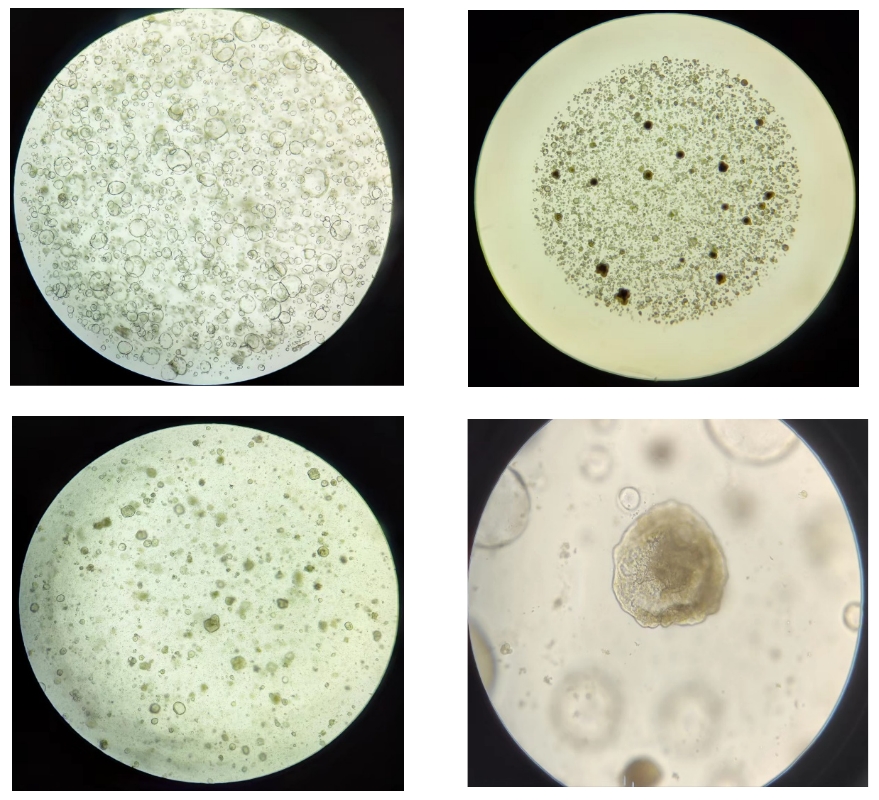
Figure 4: Image of Organoids with a Larger Number or Greater Volume
II. When the number of organoids is larger or their volume is greater:
1. Collection and Washing of Organoids
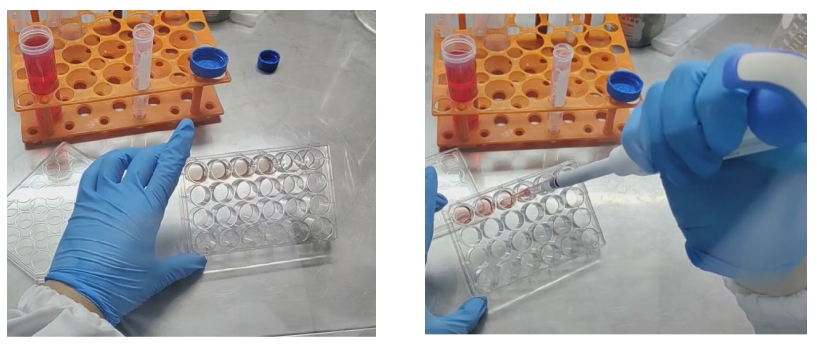
(1) Aspirate the culture medium using a pipette, and add approximately 1-2 mL of 4°C organoid passaging culture buffer (ABS9730) to each well, gently disperse the matrix gel, and collect in a 15 mL centrifuge tube (for a 24-well plate, group every 5 wells together) (as shown in the figure).
(2) Add organoid passaging culture buffer to a final volume of 14 mL (the more buffer you use, the more diluted the matrix gel will be, making it easier to remove), let it sit at 4°C for 40 minutes or place it at -20°C for 5 minutes (the purpose is to soften the matrix gel; if the freezer has a strong freezing effect, freeze for 3 minutes), then centrifuge at 300g, 4°C, for 5 minutes and discard the supernatant.
2. Organoid Digestion
(1) Add an appropriate amount of organoid passaging digestion solution (ABS9520) (1-2 times the volume of the organoid suspension) and digest for 2-3 minutes under a laminar flow hood (you can gently pipette 1-2 times during this process) (as shown in Figure 7);
(2) Add an appropriate amount of organoid passaging culture buffer (the ratio of Buffer G to Digestion Solution D is 5:1) to terminate the digestion, then centrifuge at 300g at 4°C for 5 minutes and discard the supernatant; Note: If there is too much residual gel left (more than 50μL), you can repeat step 2 of the organoid collection and washing process 1-2 times (as shown in Figures 8 and 9);
(3) Add 1 mL of organoid passaging culture buffer to resuspend the pellet and transfer into a 5 mL centrifuge tube, then centrifuge at 300g at 4°C for 5 minutes and discard the supernatant (as shown in Figure 10).

III. Plating of Organoids
Organoids are typically passaged at a 1:2 ratio. For example, if collecting from 5 wells of a 24-well plate and passaging into 10 wells, the required amount of matrix gel is 25μL * 10 = 250μL. Apply 25μL of matrix gel per well to plate the cell clump suspension in a 24-well cell culture plate (as shown in Figure 11), and let it sit in the incubator for 40-60 minutes before adding 500μL-750μL of organoid culture medium (as shown in Figure 12).

The organoids after digestion and passaging are shown in the figure below.

Figure: Post-Digestion and Passaging Plating Image of ICC (Immunocytochemistry)
IV. Proliferation Phenomenon of Organoids After Passaging

Common Questions:
1. How many layers are formed after centrifugation of the matrix gel and organoids collected?
Answer: Normally, after centrifugation, there will be 3 layers formed (as shown in the figure below): buffer solution, matrix gel, and organoid pellet. Only the organoid pellet should be retained.

2. What are the reasons for the lack of layer separation after centrifugation of the collected matrix gel and organoids?
Answer: There are several factors, such as a small quantity of organoids, small volume, insufficient cooling time, and the viscosity of the matrix gel. After centrifugation, there are often two layers (as shown in the figure below). If the matrix gel and organoids still do not separate after repeated washing and centrifugation, you can retain the lower 2/3 of the matrix gel and organoid suspension for passaging. (The upper 1/3 is essentially primary cell debris or dead cells.)

3. How to effectively separate the matrix from the organoids? Consider the following steps:
(1) Add as much buffer as possible (for example, in a 15 mL centrifuge tube, fill up to 14 mL) to dilute the matrix gel-organoid mixture, which can facilitate separation;
(2) Place the matrix gel-organoid mixture at -20°C for 5 minutes (Note: If the freezer has a strong cooling effect, freeze for 3 minutes) to accelerate the liquefaction of the matrix gel, which can facilitate separation;
(3) The choice of centrifuge is crucial; a horizontal rotor centrifuge is more advantageous for separating matrix gel and organoids compared to a fixed-angle rotor centrifuge;
(4) It is best to use a centrifuge at 4°C (to prevent the matrix gel from solidifying), and the centrifugal speed can be moderately increased (not exceeding 500g at most), while the centrifugation time can be extended as needed (not exceeding 10 minutes at most).
|
Item NO. |
Product Name |
Size |
|
1kit |
||
|
1kit |
||
|
Mouse Lung Organoid Culture Medium Kit |
1kit |
|
|
Human Breast Cancer Organoid Culture Medium Kit |
1kit |
|
|
Human Endometrial carcinoma Organoid Culture Medium Kit |
1kit |
|
|
Human Colorectal cancer Organoid Culture Medium Kit |
1kit |
|
|
Human Lung Cancer Organoid Culture Medium Kit |
1kit |
|
|
1kit |
||
|
Human Pancreatic Cancer Organoid Culture Medium Kit |
1kit |
|
|
Human Ovarian Cancer Organoid Culture Medium Kit |
1kit |
|
|
Human Liver Organoid Culture Medium Kit |
1kit |
|
|
1kit |
||
|
Mouse Gastric Cancer Organoid Culture Medium Kit |
1kit |
|
|
1kit |
||
|
Mouse Breast Cancer Organoid Culture Medium Kit |
1kit |
|
|
Mouse Hepatocarcinoma Organoid Culture Medium Kit |
1kit |
|
|
1kit |
Absin provides antibodies, proteins, ELISA kits, cell culture, detection kits, and other research reagents. If you have any product needs, please contact us.
|
Absin Bioscience Inc. |
 Follow us on Facebook: Absin Bio Follow us on Facebook: Absin Bio |