

- Cart 0
- English
Modeling New Directions - CRISPR-Cas9 Gene-Edited Organoid Models
October 29, 2024
Clicks:289


An article titled "Generation and multiomic profiling of a TP53/CDKN2A double-knockout gastroesophageal junction organoid model" was published by Stephen J Meltzer from Johns Hopkins University on November 30, 2022, in SCIENCE TRANSLATIONAL MEDICINE (19.319/Q1). The inactivation of TP53 and CDKN2A occurs early in the development of gastroesophageal junction (GEJ) tumors, but there was previously a lack of models for the transition from GEJ to GEJ cancer. This study combines organoids and gene editing to double-knockout the TP53/CDKN2A genes in normal GEJ organoid models, simulating the cancer transformation process, including changes in metabolism and the epigenome. It provides new insights for tumor research and clinical treatment when suitable models are lacking.
Research Project Background:
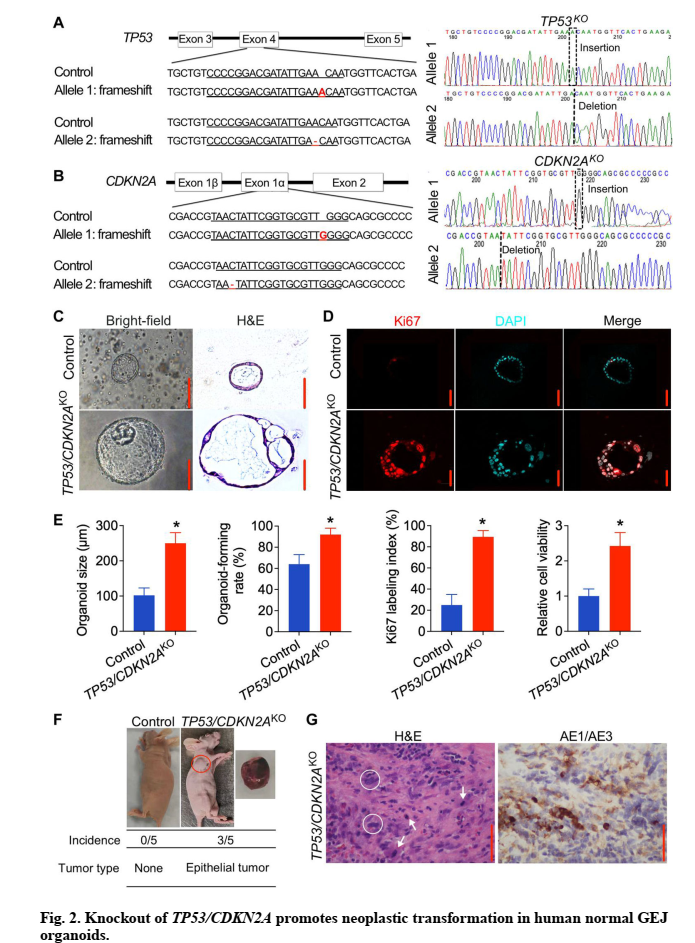
Inactivation of TP53 and CDKN2A occurs early in the development of gastroesophageal junction (GEJ) tumors. Due to the lack of GEJ-specific disease models, the cancer-promoting impact of TP53 and CDKN2A inactivation in GEJ has not been studied. This study employs both wild-type primary human GEJ organoid models and CRISPR-Cas9-mediated TP53 and CDKN2A double-knockout edited transformed GEJ organoid models. The double-gene knockout GEJ organoids exhibit dysplasia in vitro, possess neoplastic characteristics, and are capable of tumorigenesis in mice.
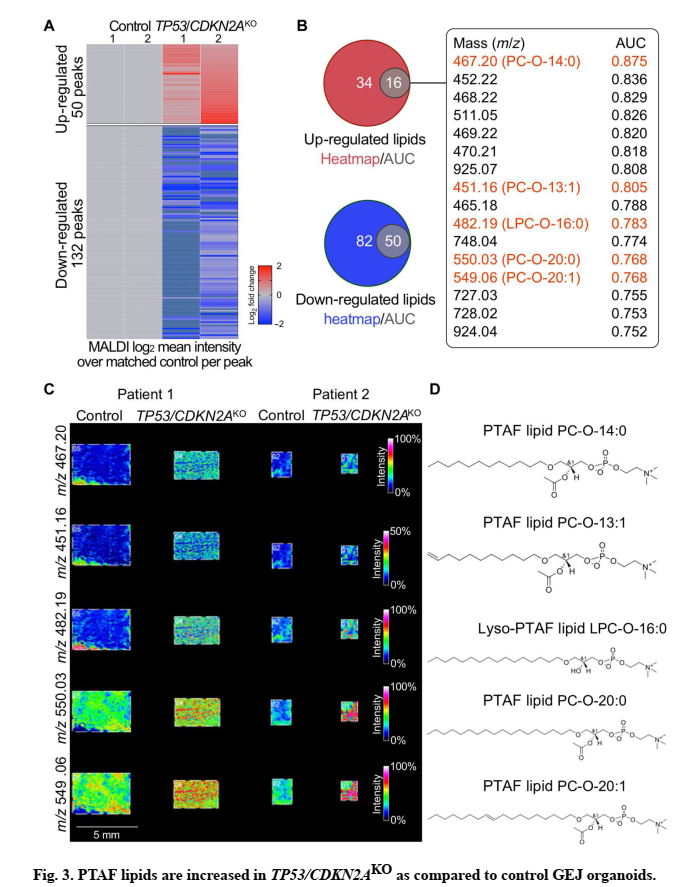
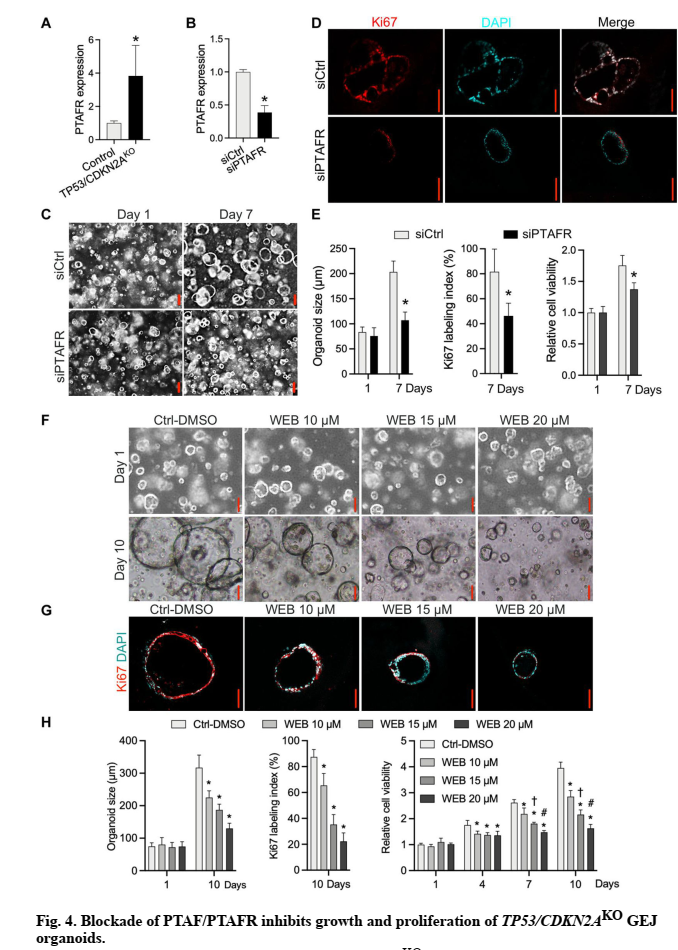
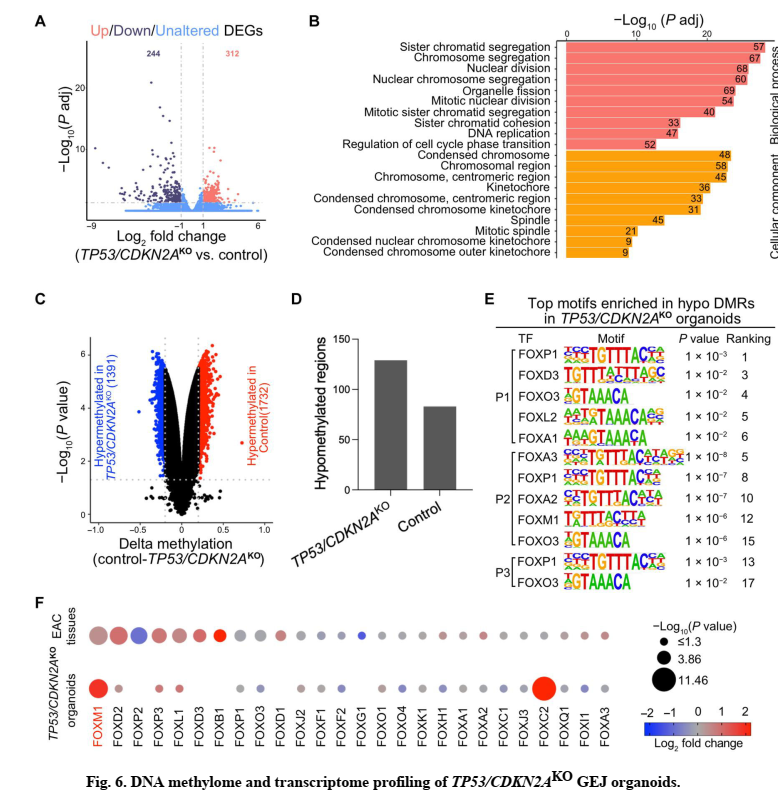
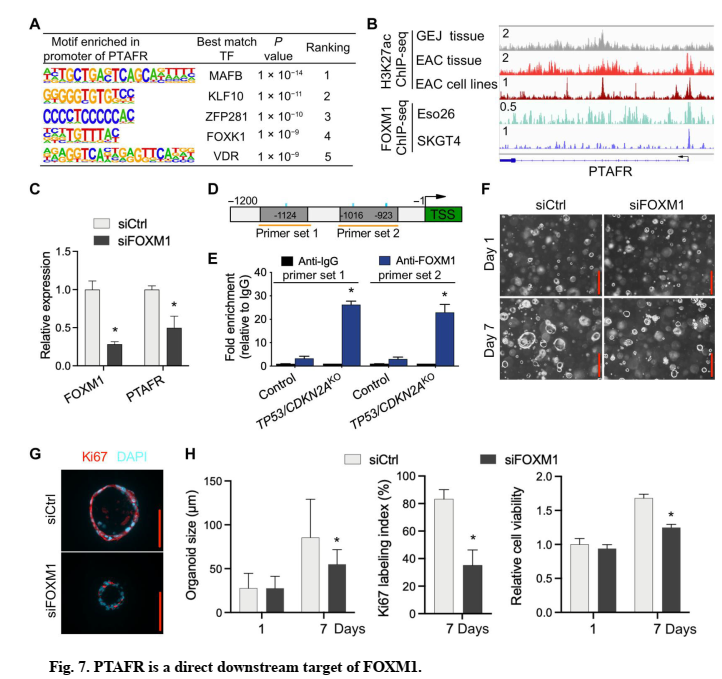
Lipidomics analysis successfully identified the most significantly altered lipid—platelet-activating factor (PTAF). Suppression of PTAF/PTAF receptor by siRNA interference or inhibitor (WEB2086) reduced the proliferation and in vivo tumorigenesis of TP53/CDKN2A gene-knockout organoids. TP53/CDKN2A double inactivation disrupts the transcriptome and DNA methylome, particularly FOXM1. FOXM1 activates PTAFR transcription by binding to the PTAF receptor promoter, further amplifying the PTAF-PTAFR pathway.
Research Roadmap:

Research Results:
1. Establishment and Characterization of Human Normal Gastroesophageal Junction Organoids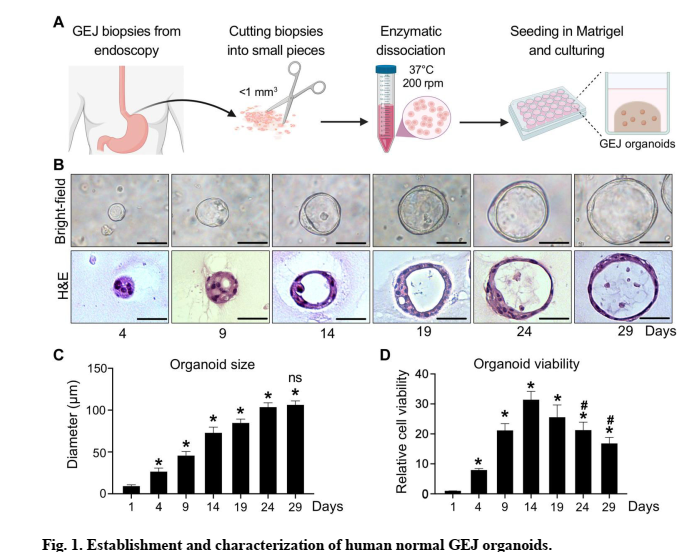
2. TP53/CDKN2A Double Gene Knockout Promotes the Proliferation, Hyperplasia, and Tumorigenesis of Gastroesophageal Junction Organoids
3. Lipidomics MALDI-IMS Sequencing: PTAF was found to be the most significantly altered in TP53/CDKN2A knockout gastroesophageal junction organoids.
4. Inhibition of PTAF/PTAFR Expression through siRNA Interference and Inhibitor WEB2086 to Suppress the Proliferation of TP53/CDKN2A Knockout Gastroesophageal Junction Organoids and Tumorigenesis in Mice.
5. DNA Methylation and Transcriptome Sequencing: One of the Most Significantly Hypomethylated Sequences in Double-Knockout Tumor Organoids is from the FOX Family.
6. ChIP-seq Functional Validation: Direct Binding of FOXM1 to the PTAFR Promoter Enhances PTAFR Expression and Proliferation in GEJ Organoids.
In this study, by genetically editing and knocking out two critical tumor suppressor genes, we successfully induced the transformation of gastroesophageal junction (GEJ) organoids towards a tumorigenic direction, constructing a GEJ-GEJ cancer transition organoid model. This provides a new direction for the exploration of early tumorigenesis and development, and also offers a new modeling direction for subsequent research on other clinical diseases—the new direction of modeling—organoid models.
|
Item NO. |
Product Name |
Size |
|
1kit |
||
|
1kit |
||
|
Mouse Lung Organoid Culture Medium Kit |
1kit |
|
|
Human Breast Cancer Organoid Culture Medium Kit |
1kit |
|
|
Human Endometrial carcinoma Organoid Culture Medium Kit |
1kit |
|
|
Human Colorectal cancer Organoid Culture Medium Kit |
1kit |
|
|
Human Lung Cancer Organoid Culture Medium Kit |
1kit |
|
|
1kit |
||
|
Human Pancreatic Cancer Organoid Culture Medium Kit |
1kit |
|
|
Human Ovarian Cancer Organoid Culture Medium Kit |
1kit |
|
|
Human Liver Organoid Culture Medium Kit |
1kit |
|
|
1kit |
||
|
Mouse Gastric Cancer Organoid Culture Medium Kit |
1kit |
|
|
1kit |
||
|
Mouse Breast Cancer Organoid Culture Medium Kit |
1kit |
|
|
Mouse Hepatocarcinoma Organoid Culture Medium Kit |
1kit |
|
|
1kit |
Absin provides antibodies, proteins, ELISA kits, cell culture, detection kits, and other research reagents. If you have any product needs, please contact us.
|
Absin Bioscience Inc. |
 Follow us on Facebook: Absin Bio Follow us on Facebook: Absin Bio |